

Proper Truck Suspension System Maintenance for Enhanced Vehicle Durability
Truck suspension systems are constantly subjected to heavy loads and a wide variety of road conditions, making them prone to wear and tear over time. Regular truck suspension maintenance not only helps ensure a smoother ride but also reduces the risk of damage to related components such as tires, the steering system, and the chassis. This is an important factor in helping transportation businesses reduce repair costs and improve vehicle operating efficiency.
Signs That Your Truck Suspension System Needs Maintenance
The suspension system plays a crucial role in absorbing vibrations, maintaining stability, and ensuring the safe operation of a truck. However, after prolonged use, suspension components gradually wear out and deteriorate. Without timely inspection and maintenance, the vehicle may experience issues that affect both safety and operational performance. Below are the most common signs indicating that it is time to perform truck suspension maintenance.
Excessive Vehicle Vibration
One of the easiest signs to recognize is excessive vibration while driving, especially on rough roads or over potholes.
When the suspension system is functioning properly, components such as shock absorbers, leaf springs, or air bags absorb most of the impact from the road surface. However, when these parts become worn or damaged, vibrations are transferred directly to the cab and vehicle body.
Common symptoms include:
- Strong cab vibrations when driving over potholes.
- Excessive bouncing after passing over obstacles.
- Unstable steering feel on rough roads.
These symptoms often indicate worn shock absorbers or suspension damping components that require immediate inspection.
Vehicle Leaning or Loss of Balance
If one side of the truck appears lower than the other, or if the vehicle tends to lean when carrying cargo, the suspension system may be experiencing problems. Common causes include:
- Sagging or broken leaf springs.
- Air bags losing pressure.
- Weak suspension springs.
- Deformed suspension linkage components.
This condition not only reduces vehicle performance but also causes uneven load distribution, increasing the risk of tire and chassis damage.
Uneven Tire Wear
Many truck owners assume that uneven tire wear is caused only by incorrect tire pressure or wheel alignment issues. However, a deteriorating suspension system is also a common cause.
When the suspension can no longer keep the wheels properly stabilized, the tires make uneven contact with the road surface, resulting in:
- Excessive wear on the inner or outer edges of the tire.
- Patchy or irregular tread wear.
Early detection of this issue can help reduce tire replacement costs and prevent related mechanical damage.
Unusual Noises from the Undercarriage
If you hear unusual sounds coming from underneath the vehicle during operation-such as knocking, rattling, metal clunking, squeaking, or friction noises-some suspension components may be loose, worn, or damaged.
Components commonly responsible for these noises include:
- Bushings.
- Ball joints.
- Shock absorbers.
- Leaf spring pins.
- Stabilizer bars.
These warning signs should not be ignored, as continued operation may lead to more serious damage.
Vehicle Pulling to One Side
If the truck tends to drift left or right even when the driver keeps the steering wheel straight, the suspension system could be the cause.
Common reasons include:
- Uneven performance of leaf springs or shock absorbers on either side.
- Wheel alignment changes caused by suspension wear.
- Excessive play in suspension joints and linkages.
This issue not only reduces vehicle control but also accelerates tire wear and increases fuel consumption.
Shock Absorber Oil Leakage
For suspension systems equipped with hydraulic shock absorbers, oil residue around the shock absorber body is a sign that the sealing components have failed.
When shock absorbers leak oil:
- Damping performance is significantly reduced.
- The vehicle becomes more prone to bouncing and vibration.
- Stability during cornering and emergency braking is compromised.
If this condition is detected, the shock absorbers should be repaired or replaced as soon as possible.
Continuous Bouncing After Passing Over Potholes
A healthy suspension system quickly restores vehicle balance after passing over an obstacle.
However, if the truck continues to oscillate or bounce several times after hitting a pothole, this is a clear indication that:
- The shock absorbers are worn out.
- The damping system is losing effectiveness.
- Suspension components are experiencing excessive wear.
This condition significantly reduces driver comfort and negatively impacts operational safety.
Air Bag Leaks or Pressure Loss (For Air Suspension Systems)
On trucks equipped with air suspension systems, air bags play a critical role in supporting loads and reducing vibrations.
When an air bag malfunctions, the following symptoms may occur:
- One side of the vehicle sits lower than the other.
- The air compressor runs continuously.
- The air suspension warning light illuminates.
- Reduced shock absorption performance.
These signs indicate that the vehicle should be taken to a service center for inspection and timely suspension maintenance.
Noticeable Decline in Driving Performance
Even if there are no obvious signs of component failure, truck owners should pay attention to overall driving performance.
If you notice that:
- The vehicle no longer rides as smoothly as before.
- Cornering stability has decreased.
- Cab vibrations have become more pronounced.
- Stability is reduced when carrying heavy loads.
The suspension system may already be deteriorating and should undergo a comprehensive inspection.
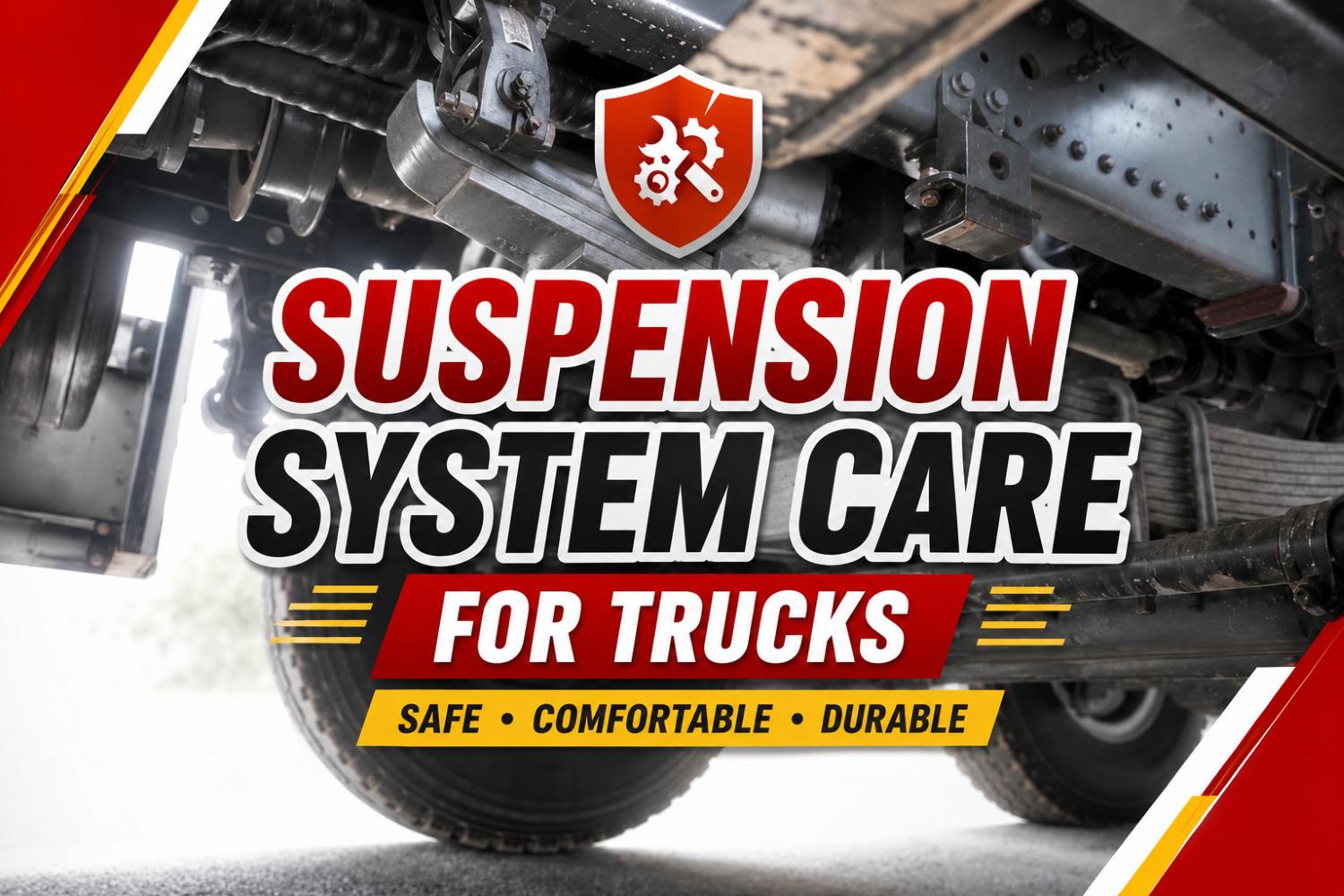
Truck Suspension System Maintenance Checklist
Below are the key components that should be inspected during truck suspension system maintenance.
- Inspect the shock absorbers: Shock absorbers are responsible for absorbing road impacts and minimizing vehicle body vibration. They should be checked for oil leaks, physical damage, reduced damping performance, and abnormal wear.
- Inspect the leaf springs: For trucks equipped with a leaf spring suspension system, this is one of the most critical maintenance items. Sagging or broken leaf springs can cause vehicle imbalance, reduce load-carrying capacity, and compromise driving safety.
- Inspect suspension bushings: Over time, rubber bushings can harden, crack, wear out, or become deformed. They should be inspected regularly, and any damaged bushings should be replaced promptly.
- Inspect ball joints and suspension linkages: Ball joints connect the suspension system to the steering system, allowing the wheels to move smoothly in different directions. If the ball joints are worn or have excessive play, the truck may pull to one side, experience steering wheel vibration, and lose steering precision.
- Inspect the stabilizer bar: The stabilizer (anti-roll) bar helps minimize body roll during cornering or lane changes. A damaged stabilizer bar can cause excessive body sway and reduce vehicle stability, especially at higher speeds.
- Inspect the air suspension system: For modern trucks equipped with air suspension, all pneumatic components—including air springs, air lines, valves, and the air compressor—should be thoroughly inspected as part of routine maintenance.
- Inspect the chassis and suspension mounting points: Since the suspension system is directly connected to the chassis, all mounting points should be carefully checked. Loose or damaged mounting points can significantly reduce the effectiveness of the entire suspension system.
- Inspect mounting bolts and nuts: Although these are relatively small components, properly tightened bolts and nuts are essential for maintaining the safety and structural integrity of the suspension system.
- Check wheel alignment: If the wheel alignment angles are outside the manufacturer’s specifications, adjustments should be made to ensure optimal handling, tire wear, and overall driving performance.
- Perform a road test: This is the final step to verify that the truck suspension maintenance has been completed successfully and that the suspension system meets all technical and performance requirements.
Truck Suspension System Maintenance Procedure
Step 1: Perform a General Suspension Inspection
This is the initial step to assess the overall condition of the suspension system before carrying out detailed maintenance.
The technician will inspect:
- Shock absorbers
- Leaf springs or coil springs
- Stabilizer (anti-roll) bar
- Ball joints and suspension linkages
- Air suspension system (if equipped)
- Suspension brackets and chassis mounting points
Based on this initial inspection, the technician can identify worn, cracked, broken, or deformed components and determine the appropriate maintenance or repair plan.
Step 2: Clean the Suspension System
After extended operation, mud, grease, and road debris often accumulate around the undercarriage and suspension components.
Cleaning includes:
- Pressure washing the entire undercarriage
- Cleaning the leaf springs and shock absorbers
- Cleaning suspension joints
- Removing dirt and debris from mounting points
Proper cleaning not only makes damage easier to detect but also helps prevent corrosion and oxidation of metal components.
Step 3: Inspect the Shock Absorbers
The technician should inspect:
- Oil leakage
- Shock absorber elasticity and damping performance
- Shock absorber housing condition
- Security of the mounting brackets
If the shock absorbers are weak or leaking oil, their ability to absorb road impacts is significantly reduced, causing excessive bouncing over potholes or rough roads. In such cases, replacement is recommended to restore proper suspension performance.
Step 4: Inspect the Leaf Springs or Coil Springs
For trucks equipped with leaf spring suspension, this is one of the most critical maintenance procedures.
Inspection includes:
- Checking for cracked or broken leaf springs
- Measuring leaf spring sag
- Inspecting spring pins and spring shackles
- Checking the leaf spring mounting bolts
For trucks equipped with coil springs, technicians evaluate the spring’s elasticity and load-bearing capability.
Step 5: Inspect Rubber Bushings and Ball Joints
Rubber bushings and ball joints reduce vibration and maintain secure connections between suspension components.
The inspection includes:
- Checking bushing wear
- Looking for cracks or aging rubber
- Measuring ball joint play
- Inspecting spherical joints and linkage connections
If excessive play is detected, the affected components should be replaced to maintain stable vehicle handling.
Step 6: Inspect the Stabilizer Bar
The stabilizer (anti-roll) bar minimizes body roll when cornering or changing lanes.
Inspection items include:
- Stabilizer bar condition
- Stabilizer bar bushings
- Mounting points
- Mounting brackets and bolts
A bent or damaged stabilizer bar can significantly reduce vehicle stability, especially at higher speeds.
Step 7: Inspect the Air Suspension System (If Equipped)
For modern trucks fitted with an air suspension system, technicians should carefully inspect the following components:
Air Springs
Check for:
- Cracks or tears
- Ability to maintain air pressure
- Deformation under load
Air Lines
Inspect for:
- Air leaks
- Tightness of hose connections
- Aging or deterioration of air hoses
Control Valves
Check:
- Valve opening and closing operation
- Pressure regulation accuracy
- Performance of related sensors
Routine inspection helps detect pneumatic issues before they affect the truck’s load-carrying performance.
Step 8: Inspect the Chassis and Suspension Mounting Points
The technician will examine:
- Cracks or deformation in the chassis
- Welded joints
- Suspension mounting brackets
- Areas affected by corrosion or rust
Any damage should be repaired promptly to prevent structural issues that could compromise the vehicle’s load-bearing capacity.
Step 9: Retighten Bolts and Fasteners
Continuous vibration during operation can gradually loosen suspension fasteners.
The technician will:
- Check bolt tightening torque
- Retorque bolts according to the manufacturer’s specifications
- Replace damaged bolts or nuts
This step ensures the structural integrity and safety of the entire suspension system.
Step 10: Check and Adjust Wheel Alignment
After all inspections and repairs have been completed, the technician will verify the vehicle’s wheel alignment geometry, including:
- Toe angle
- Camber angle
- Caster angle
Proper wheel alignment ensures:
- Stable driving performance
- Even tire wear
- Reduced steering pull
- Extended suspension component life
Step 11: Perform a Road Test and Final Evaluation
The final step is a road test to verify the effectiveness of the maintenance work.
The technician will evaluate:
- Vibration absorption performance
- Vehicle stability
- Steering pull
- Unusual noises from the undercarriage
- Overall performance of the shock absorbers and suspension system
If all performance indicators meet the required standards, the truck is approved for return to service and ready for normal operation.
How Often Should a Truck Suspension System Be Serviced?
As a general recommendation, the truck suspension system should be inspected every 10,000–20,000 km (6,200–12,400 miles) or according to the maintenance schedule specified by the vehicle manufacturer.
In addition, the suspension system should be inspected immediately if:
- The truck frequently carries overloaded cargo.
- The vehicle is regularly driven on rough or uneven roads.
- Any abnormal symptoms appear, such as excessive vibration, unusual noises, vehicle leaning, uneven tire wear, or steering instability.
Regular inspections help identify potential issues early, ensuring optimal suspension performance, improved safety, and lower long-term maintenance costs.
Conclusion
Regular truck suspension system maintenance is essential for maintaining vehicle stability, improving driving safety, and extending the service life of the truck. Routine inspections of key components such as shock absorbers, leaf springs, rubber bushings, and air suspension systems help detect potential issues early, reduce repair costs, and ensure the vehicle performs efficiently under all road conditions.
Don’t wait until a suspension problem develops before taking action. Proactive maintenance protects your investment, minimizes unexpected downtime, and maximizes the operational efficiency and profitability of your transportation business.
Featured news


Related news

What Driving License Do You Need to Drive a HOWO Truck?

Review of the HOWO V750L 4×2 6.3-Meter Light-Duty Truck