


Are Electric Trucks More Cost-Effective Than Diesel Trucks in the Long Run?
Compared with traditional diesel trucks, electric trucks have a different powertrain, using electricity instead of fossil fuels and featuring fewer moving mechanical components. However, to accurately determine whether electric trucks are more cost-effective than diesel trucks, you should not look only at the initial purchase price. Fuel costs, maintenance expenses, daily driving distance, payload, charging time, and operating conditions can all affect overall cost efficiency.
Are Electric Trucks More Cost-Effective Than Diesel Trucks in Terms of Fuel Costs?
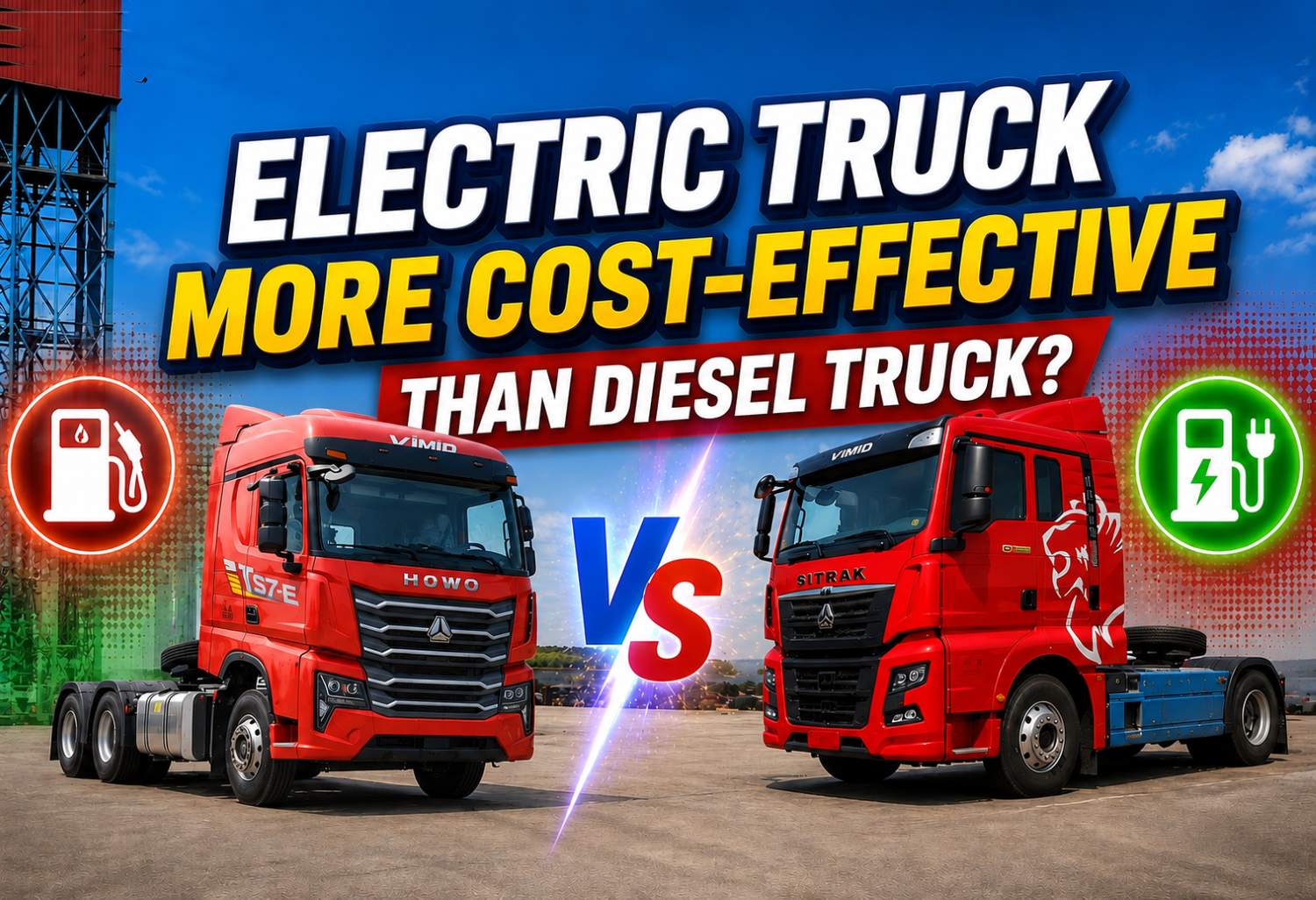
Electric trucks can significantly reduce fuel costs compared with diesel trucks. In terms of energy consumption alone, the operating cost per kilometer of an electric truck is typically 40% to 60% lower than that of a diesel truck.
Real-world fuel cost comparison (estimated per 100 km)
| Criteria | Diesel Truck | Electric Truck |
|---|---|---|
| Estimated consumption/100 km | ~28–32 liters of diesel | 110–130 kWh |
| Reference unit price | ~20,000–24,000 VND/liter | ~3,000–4,000 VND/kWh |
| Cost/100 km | ~560,000–768,000 VND | ~330,000–520,000 VND |
| Cost difference | — | ~40% savings |
Why is there such a significant cost difference?
- Energy conversion efficiency: Electric motors convert approximately 80–90% of the energy from the battery into mechanical energy to propel the vehicle. In contrast, internal combustion engines (Diesel) typically achieve only around 30–40% efficiency, with the remaining energy lost as heat and friction.
- Optimized for urban driving: Electric trucks feature a Regenerative Braking system. When driving in the city with frequent stops and starts, the electric motor can recover energy and feed it back into the battery. By comparison, diesel trucks consume a significant amount of fuel when repeatedly crawling forward in stop-and-go traffic.
When considering fuel costs alone, electric trucks have a clear advantage in terms of cost savings. They are an optimal choice for logistics businesses or drivers making deliveries within cities, especially when operating on fixed routes and charging the vehicle overnight.
Are Electric Trucks More Cost-Effective Than Diesel Trucks in Terms of Maintenance Costs?
Electric trucks offer significantly lower maintenance costs compared with diesel trucks. Over the entire operating lifecycle, the cost of routine maintenance and repairs for electric trucks is typically 30% to 60% lower than that of diesel trucks, depending on the vehicle type and operating scale.
Detailed Comparison of Maintenance Items
| Maintenance Item | Diesel Truck | Electric Truck |
|---|---|---|
| Engine Oil & Oil Filter Replacement | Every 5,000–10,000 km (high cost) | Not required |
| Fuel Filter / Engine Air Filter | Requires frequent periodic replacement | Not required |
| Exhaust System (DPF, SCR, AdBlue) | Requires maintenance, residue removal, and urea solution refills | Not required |
| Brake System (Brake Pads & Discs) | Wears faster due to heavy loads and trailers | Lasts over 50% longer thanks to regenerative braking |
| Major Routine Maintenance | Differential oil, transmission oil, coolant, tires, and brakes | Battery/motor coolant, differential oil, tires, and brakes |
Key Reasons Why Electric Trucks Have Lower Maintenance Costs
A Much Simpler Mechanical Structure
- Diesel engines consist of hundreds of moving components that are continuously exposed to friction, such as pistons, piston rings, crankshafts, valves, high-pressure fuel injectors, turbochargers, and more.
- Electric motors have only a few primary moving components, mainly the rotor and stator, eliminating many of the risks associated with complex mechanical failures.
Fewer Fluids and Consumables to Replace
Electric trucks do not require engine oil, oil filters, or exhaust after-treatment fluids such as AdBlue/DEF. These are recurring maintenance expenses for diesel trucks that meet Euro 4 and Euro 5 emission standards.
Regenerative Braking Reduces Wear on Mechanical Brakes
When the driver releases the accelerator, the electric motor automatically helps slow the vehicle down while generating electricity to recharge the battery. This braking force reduces the workload on the mechanical brake system, helping significantly extend the service life of brake pads and discs.
Maintenance Cost Savings Based on Real-World Sources
- Numerous TCO (Total Cost of Ownership) reports on commercial trucks indicate that electric trucks have 30-50% lower maintenance costs than diesel trucks, thanks to fewer moving parts, no engine oil changes, and the absence of complex exhaust after-treatment systems.
- Some studies and real-world fleet data show 40-60% savings over the first 150,000 miles, primarily due to significantly fewer routine maintenance requirements.
- In Vietnam, 2025-2026 market analyses estimate that maintenance costs for electric trucks are only 30-40% of those for diesel trucks, representing a 60-70% reduction.
- European fleet data over a 4-year/300,000 km period shows annual maintenance costs falling from USD 4,200-5,800 for diesel trucks to USD 1,900-2,600 for BEVs, equivalent to a 53-57% reduction.
Are Electric Trucks More Cost-Effective Than Diesel Trucks When Considering Total Cost of Ownership?
In many real-world operating scenarios, electric trucks already have a lower Total Cost of Ownership (TCO) than diesel trucks. However, the level of savings and payback period depend heavily on the vehicle type, operating intensity, electricity and diesel prices, and available incentives.
TCO Analyses for 2025-2026
- Urban delivery:
- Electric truck TCO is typically 10-20% lower than diesel.
- The payback period is approximately 2-3 years, thanks to high mileage, frequent stops and starts (allowing greater use of regenerative braking), and lower energy costs per kilometer.
- Fixed-route transportation:
- Electric truck TCO is approximately 5-15% lower.
- The payback period is typically 3-4 years and can be shorter with vehicle purchase incentives or lower industrial electricity rates.
- Long-haul transportation:
- The TCO gap is narrower, with many scenarios showing costs 0-10% lower or nearly equivalent over a 5-7-year period.
- The payback period is typically 4-6 years, depending heavily on electricity prices along the route, charging downtime, and actual payload.
Estimated TCO Comparison Table
| Cost Type (VND) | Cost Type (Estimated) | Diesel Truck | Electric Truck |
| First-year investment cost | 1,428,850,000 | 3,400,850,000 | |
| 1-year fuel cost | 876,000,000 | 496,127,710 | |
| 1-year maintenance + fixed cost | 138,326,000 | 75,576,000 | |
| Total cumulative cost by year (VND) | Year 1 | 2,443,176,000 | 3,972,553,710 |
| Year 2 | 3,457,502,000 | 4,544,257,420 | |
| Year 3 | 4,471,828,000 | 5,115,961,330 | |
| Year 4 | 5,486,154,000 | 5,687,664,840 | |
| Year 5 | 6,500,480,000 | 6,259,368,550 |
Key Factors That Determine the Economic Viability
Operating Intensity (Daily Mileage)
- If the truck travels more than 120-150 km/day: Electric trucks are highly cost-effective. The more the truck is driven, the sooner the CapEx break-even point is reached.
- If the truck travels less than 50 km/day: Fuel and maintenance savings may not accumulate quickly enough to offset the higher initial purchase price.
Charging Scenario
- Overnight charging at the depot (using industrial or residential electricity rates): Energy costs can be as low as ~VND 800-1,000/km, resulting in the most favorable TCO.
- Reliance on public fast-charging stations: Higher charging rates can extend the payback period by an additional 1-2 years.
Resale Value & Battery Lifecycle
- During the first five years (within the manufacturer’s battery warranty period), battery-related risks are minimal.
- However, the residual value of used electric trucks after 5-7 years is still evolving as the market develops, compared with the relatively high liquidity of used diesel trucks.
Electric trucks are a smart and clearly cost-effective investment for businesses and drivers with fixed routes, medium-to-high daily mileage (>100 km/day), and access to reliable overnight charging at their depot.
Are Electric Trucks More Cost-Effective Than Diesel Trucks Under Different Operating Conditions?
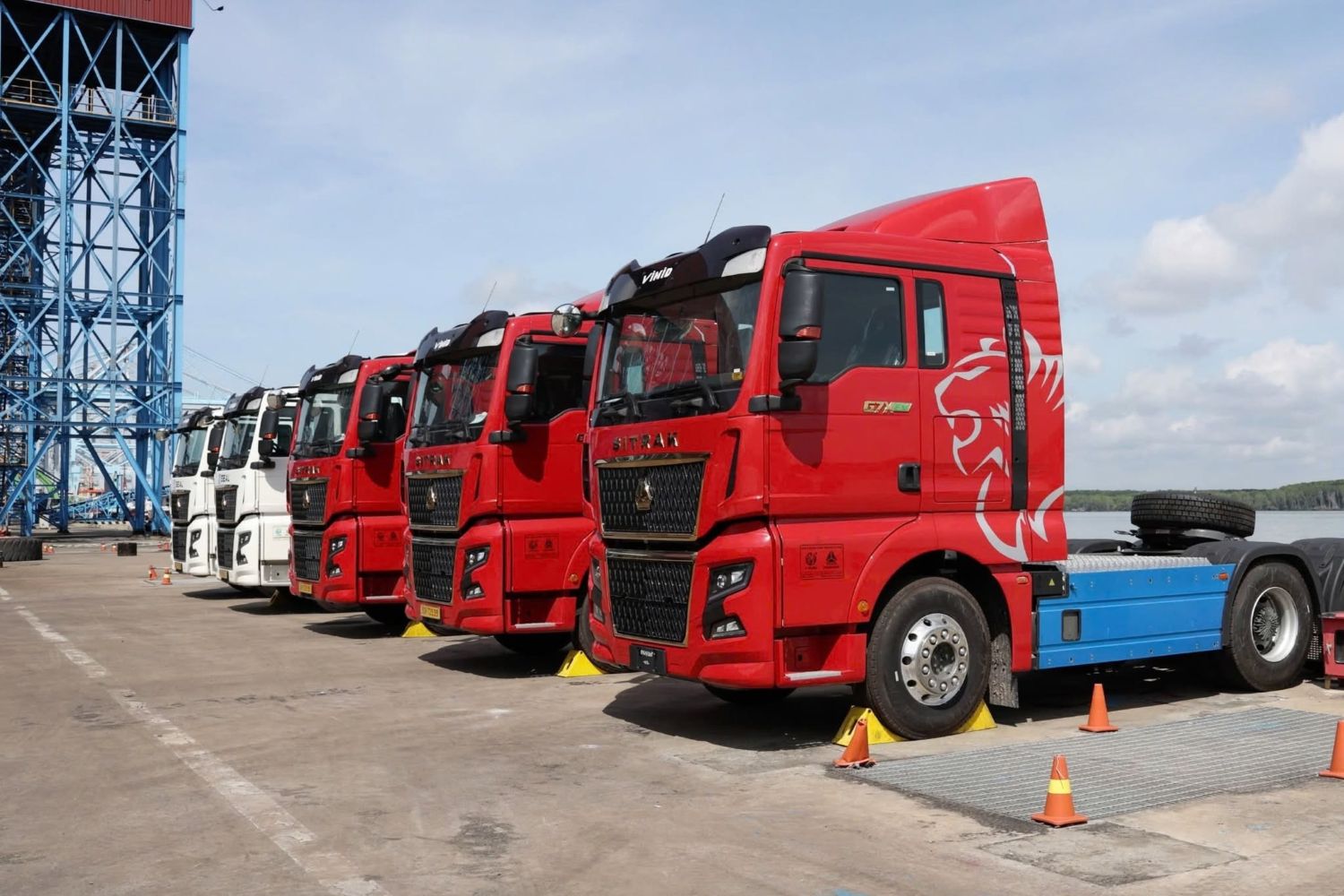
Electric trucks offer the greatest cost savings on urban routes, short- to medium-distance trips, and fixed routes, while their advantages are more limited on long-haul routes, continuous heavy-load operations, and routes with limited charging infrastructure.
Estimated Operating Costs and Payback Period Under Different Operating Conditions
| Operating Conditions | Energy Cost/km | Maintenance Cost | TCO vs. Diesel | Estimated Payback Period |
|---|---|---|---|---|
| Urban (<150 km/day) | 50-70% lower | 30-40% lower | 10-20% lower | 2-3 years |
| Regional Transport (150-400 km/trip) | Significantly lower | 30-50% lower | 5-10% lower | 3-4 years |
| Long-Haul (>400 km/trip) | Potentially lower, depending on electricity and charging costs | Lower, but partially offset by battery depreciation | Nearly equal or 0-10% lower | 4-6 years |
| Seaports | 60-75% lower | Significantly lower | ~10% lower (port operations model) | 3-5 years |
| Construction Materials & Mining | 40-50% lower in total operating costs | Lower | Significantly lower over 5 years | 3-5 years |
(Reference data from MDPI.com – an international scientific publisher specializing in open-access scientific journals and research articles.)
Conclusion
Ultimately, determining whether electric trucks are more cost-effective than diesel trucks depends on the actual transportation requirements and operating conditions. Electric trucks can offer significant advantages in terms of energy, maintenance, and operating costs when used under suitable conditions. Meanwhile, diesel trucks still have the advantage of faster refueling and greater flexibility for long-distance journeys.
Before making a decision, vehicle owners should calculate the Total Cost of Ownership (TCO), taking into account the purchase price, energy costs, maintenance expenses, and actual operating conditions.
Featured news



Related news

What Driving License Do You Need to Drive a HOWO Truck?