

8 Essential Truck Inspection and Maintenance Items for the Rainy Season
Rainy-season truck maintenance is essential to ensure that vehicles continue to operate safely on slippery and flooded roads and in high-humidity conditions. Without timely inspection and maintenance, many components—including the braking system, tires, electrical system, and undercarriage—may deteriorate more quickly, increasing the risk of breakdowns and safety hazards. So, what should be inspected to keep your truck ready for every journey during the rainy season?
Why Is Rainy-Season Truck Maintenance Essential?
During the rainy season, trucks must operate under harsher conditions than usual. Slippery roads, prolonged heavy rain, high humidity, and flooding not only affect vehicle performance but also accelerate the deterioration of many truck components. Without timely inspection and maintenance, unexpected problems may occur, disrupting transport operations and resulting in substantial repair costs.
Ensure Safe Operation on Slippery Roads
Wet roads reduce tire grip and increase braking distance. An unstable braking system or worn tires alone can significantly increase the risk of skidding, loss of steering control, or a collision. Routine maintenance helps inspect and assess the condition of critical components such as the braking system, tires, steering system, and suspension system. This enables the truck to maintain adequate road grip and stable handling even in heavy rain.
Minimize Damage Caused by Water and Humidity
Rainwater and high humidity can penetrate many vehicle components, particularly the electrical system, connectors, battery, sensors, and lighting system. If these components are not inspected and addressed promptly, they may oxidize, short-circuit, or operate intermittently. In addition, water and mud left on the undercarriage for prolonged periods can increase the risk of corrosion affecting the chassis frame, bolts, and other metal components.
Reduce the Risk of Breakdowns During a Journey
No one wants a truck to break down while transporting goods, especially in adverse weather conditions. Even a minor issue—such as faulty windshield wipers, poor headlight performance, or a weak battery—can interrupt a journey or create a potential safety hazard. Servicing the truck before the rainy season helps identify early warning signs so that repairs or replacements can be completed promptly, thereby reducing the likelihood of unplanned downtime.
Save on Repair Costs in the Long Term
Many truck owners only take their vehicles in for repair after obvious damage has occurred. However, minor components that are not inspected regularly can lead to much more serious problems. For example, deteriorated rubber seals may allow water to enter the cab and affect the electrical system, while accumulated mud under the truck may corrode the chassis frame and other metal components. By comparison, routine maintenance costs are generally much lower than the cost of repairing or replacing major assemblies.
Extend the Truck’s Service Life
A properly maintained truck will retain stable operating performance and have a longer service life. Rainy-season truck maintenance keeps critical systems in optimal operating condition, minimizes wear caused by a damp environment, and reduces stress on the engine, drivetrain, and chassis. For transport companies, it also improves fleet utilization, reduces workshop downtime, and optimizes long-term operating costs.
Keep Goods Deliveries on Schedule
For logistics providers and transport companies, every trip is directly linked to delivery schedules and customer trust. An unexpected rainy-season breakdown can delay deliveries, result in roadside assistance or recovery costs, and disrupt business plans.
Proactive truck maintenance before and throughout the rainy season keeps vehicles ready for operation, reduces the risk of interruptions, and helps ensure on-time deliveries, particularly during peak periods.

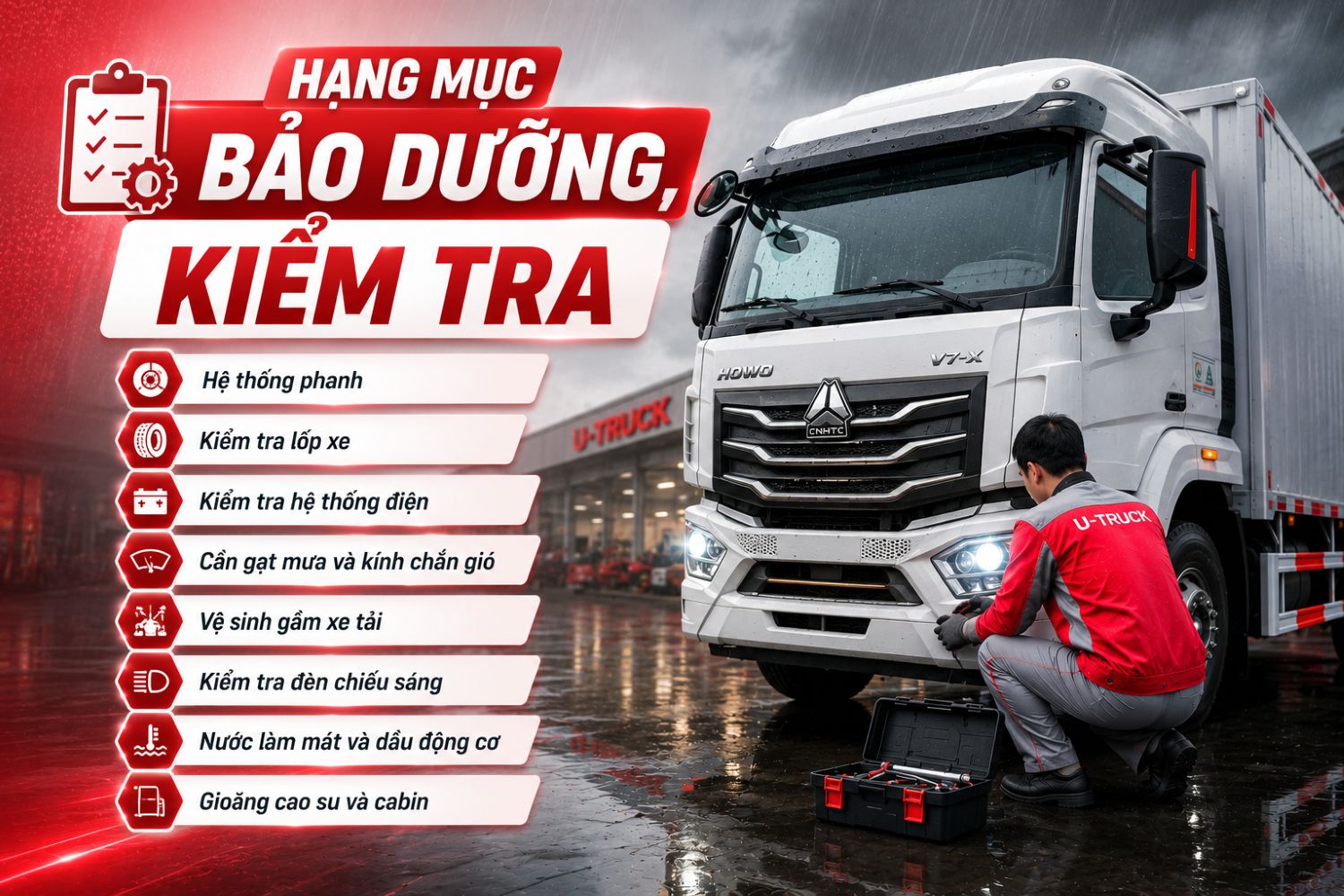
Truck Maintenance Items to Check During the Rainy Season
1. Inspect the Braking System
Braking distances increase on slippery roads. If the braking system does not operate reliably, the risk of losing control of the vehicle rises significantly. The braking system should therefore be inspected regularly. If you notice unusual noises, a stiff brake pedal, or reduced braking performance, take the truck to a service workshop for immediate inspection. Read more: Truck Brake Maintenance Procedures for Safe Operation.
2. Inspect the Tires
Tires are the only vehicle components in direct contact with the road surface. During the rainy season, worn tires increase the risk of skidding, loss of steering control, and hydroplaning. Items to inspect include tread depth, tire pressure, sidewall cracks or bulges, and uneven tread wear. Maintaining the manufacturer-recommended tire pressure also improves vehicle stability and fuel efficiency.
3. Inspect the Electrical System
High humidity is the electrical system’s “enemy.” If terminals or connectors are exposed to water, the truck may experience flickering or intermittent lights, difficulty starting, sensor fault warnings, or electrical short circuits. Items to inspect include the battery, battery terminals, wiring, fuse box, and electrical connectors. If any signs of oxidation or corrosion are found, the affected components should be cleaned or replaced promptly.
4. Inspect the Windshield Wipers and Windshield
Clear visibility is critical when driving in the rain. To ensure safe operation and an unobstructed view during the rainy season, both the windshield wipers and windshield should be inspected regularly.
- Inspect the windshield wipers: Check whether the wiper blades leave water streaks, make squeaking noises during operation, or have cracked, torn, or unevenly worn rubber. In Vietnam’s hot and humid tropical climate, windshield wipers should be replaced after approximately 12–18 months of use, while the rubber wiper inserts should be replaced every 6–12 months.
- Inspect the windshield: Make sure the windshield is free from haze, stains, or accumulated residue that could reduce visibility. If the glass remains hazy, as though covered by a thin layer of mist, even when the wipers are working normally, the wiper blades may be contaminated with dirt. Both the windshield and wiper blades should then be cleaned.
5. Clean the Truck Undercarriage
The undercarriage is directly exposed to rainwater, mud, and road contaminants, which accelerate oxidation and rust formation. During prolonged rainy periods or consistently damp and humid weather, the undercarriage and wheel wells become dirty particularly quickly because they are located close to the road surface. After every trip through a flooded or heavily muddy area, the undercarriage should therefore be thoroughly washed to remove accumulated dirt and residue.
6. Inspect the Lighting System
The vehicle lighting system plays a vital role when driving in low-light conditions, particularly during heavy rain, storms, or fog.
Drivers should inspect the following essential lights:
- High-beam and low-beam headlights: Make sure both high and low beams function normally and are not dim, misaligned, or insufficiently bright.
- Turn signals, brake lights, and hazard warning lights: Check their illumination to ensure that all signals remain clearly visible to other road users.
- Fog lights: These are particularly important in rain and fog. Check their brightness and ability to provide effective visibility in foggy conditions.
- Tail lights and reflectors: Make sure they are in good condition to improve vehicle visibility in poor-visibility conditions.
Remember to clean the lamp lenses and reflectors so that dirt does not reduce light output.
7. Check the Coolant and Engine Oil
Checking the coolant and engine oil are two essential maintenance tasks that help protect the engine against overheating, wear, and damage caused by water ingress. The coolant level and condition, engine oil, and any signs of leakage should therefore be inspected. Changing the engine oil at the recommended intervals helps the engine operate reliably in all weather conditions.
8. Inspect the Rubber Seals and Cab
Water leaking into the cab not only causes discomfort but may also affect the electrical equipment inside. To prepare a truck for rainy-season operation, drivers should inspect the door seals, windshield seals, cab doors, air-conditioning system, and drainage system. If any seals are deteriorated or cracked, they should be replaced to prevent rainwater ingress.
Important Tips for Operating a Truck During the Rainy Season
In addition to rainy-season truck maintenance, drivers should adjust their driving habits to improve safety. Important precautions include:
- Reduce speed when it is raining.
- Maintain a safe following distance from the vehicle ahead.
- Avoid sudden braking on slippery roads.
- Avoid driving through deeply flooded areas.
- Inspect the truck after driving through a flooded area.
- Do not attempt to restart the truck if the engine has stalled in a flooded area until the cause has been identified.
These practices will significantly reduce the risk of incidents during vehicle operation.
Truck Maintenance at U-TRUCK Through a Nationwide Network of 23+ Service Stations
The rainy season is a time when trucks require more thorough inspection to maintain performance and ensure safety. U-TRUCK provides truck inspection, maintenance, and repair services through a nationwide network of 23+ 3S service stations, making professional service easily accessible to customers across the country. Supported by a team of experienced technicians and modern equipment, U-TRUCK conducts comprehensive inspections of critical systems—including the brakes, tires, electrical system, engine, and undercarriage—to identify early signs of damage and minimize rainy-season risks.
Conclusion
Rainy-season truck maintenance is more than a routine inspection; it is an effective solution for improving safety, minimizing damage, and extending vehicle service life. By checking just a few essential items—such as the brakes, tires, electrical system, undercarriage, and windshield wipers—you can significantly reduce the risk of unexpected problems on the road. Proactively service your truck before and throughout the rainy season to keep every delivery safe, on schedule, and efficient.
Featured news




Related news