

Key Load-Bearing Components of a Truck Suspension System
The suspension system is the first component to absorb road impacts before they are transmitted to the chassis and cab. For heavy-duty trucks that regularly carry 15-20 tons of cargo and operate on construction sites, mining roads, or other harsh terrains, the suspension system does more than support the vehicle’s weight. It also maintains tire contact with the road surface, ensuring stable handling during acceleration, braking, and cornering.
Throughout the truck’s service life, several suspension components are subjected to continuous heavy loads and are often the first to experience wear and fatigue. Understanding the function of these components, along with the warning signs of failure, enables fleet operators to perform timely maintenance, minimize unexpected breakdowns, and reduce repair costs.
Leaf Springs – The Primary Load-Bearing Component of the Suspension System
Leaf springs are the main load-bearing component on most heavy-duty trucks, including models from HOWO and Shacman. A leaf spring assembly consists of multiple curved steel leaves stacked together and secured by a center bolt and U-bolts, which firmly attach the spring pack to the axle.
During operation, the leaf springs continuously flex and rebound to absorb both vehicle loads and road impacts. After millions of loading cycles, fatigue cracks gradually develop within the steel and eventually lead to cracked or broken spring leaves.
The location of the crack often provides valuable clues about the cause of failure:
- Cracks near the center bolt usually indicate that the center bolt has loosened, allowing the leaf springs to shift and rub against one another.
- Cracks around the spring eye are typically associated with worn or damaged bushings, which alter the intended movement of the spring.
- Cracks in the middle of a leaf spring are generally a sign of metal fatigue after prolonged service.
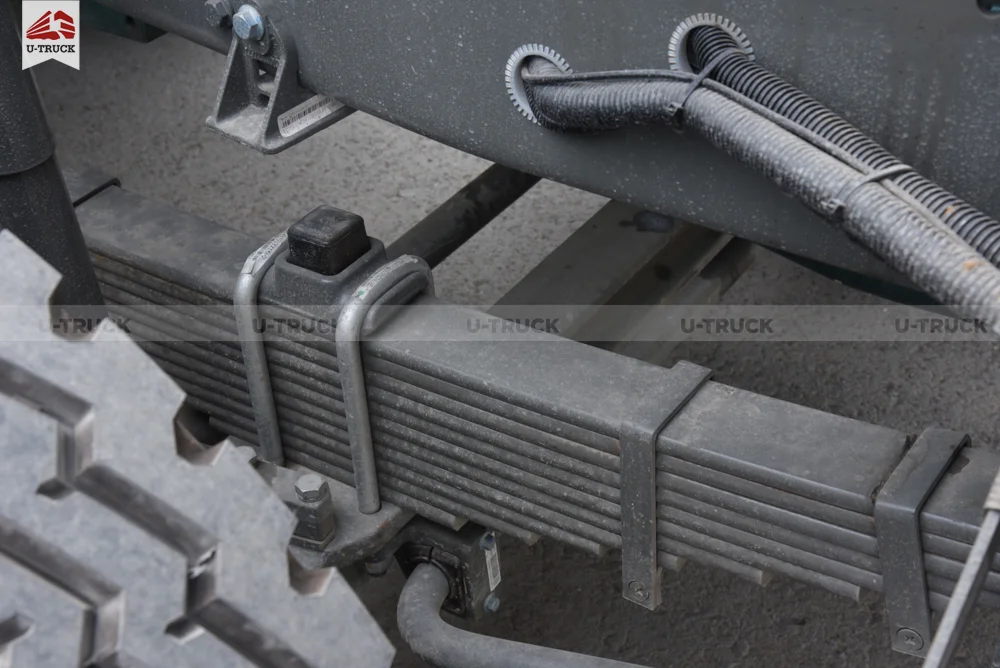
When Should a Leaf Spring Assembly Be Replaced?
The entire leaf spring assembly should be replaced if any of the following signs are observed:
- Cracks on any leaf spring. Welding is not recommended, as the high heat can alter the steel’s mechanical properties, making the spring more susceptible to future failure.
- The vehicle leans to one side or the ride height falls below the manufacturer’s specification.
- Abnormal knocking or clunking noises occur when driving over speed bumps or rough roads.
- Uneven tire wear persists even after proper wheel alignment.
Shock Absorbers – Controlling Suspension Movement
Unlike leaf springs, shock absorbers are not the primary load-bearing components of the suspension system. Their primary function is to control suspension movement after the vehicle passes over potholes, bumps, or uneven road surfaces. By damping spring oscillations, shock absorbers help maintain consistent tire contact with the road, improving vehicle stability and ride comfort.
A shock absorber consists of a piston moving through hydraulic fluid inside a sealed cylinder. As the piston moves, the hydraulic fluid is forced through calibrated valves, creating damping force. Over time, worn valves or damaged seals reduce this damping effect, causing the shock absorber to lose performance even when there are no obvious signs of external damage.
Signs of Worn Shock Absorbers
- The vehicle continues to bounce several times after driving over a pothole or bump.
- Tires develop cupping (scalloped wear) due to excessive wheel movement.
- Hydraulic oil leaks from the shock absorber body.
- The cab sways excessively or feels unstable when cornering.
Continuing to operate a truck with worn shock absorbers not only compromises ride comfort and handling but also accelerates wear on the leaf springs, tires, and other suspension components, ultimately increasing maintenance costs and reducing overall vehicle reliability.
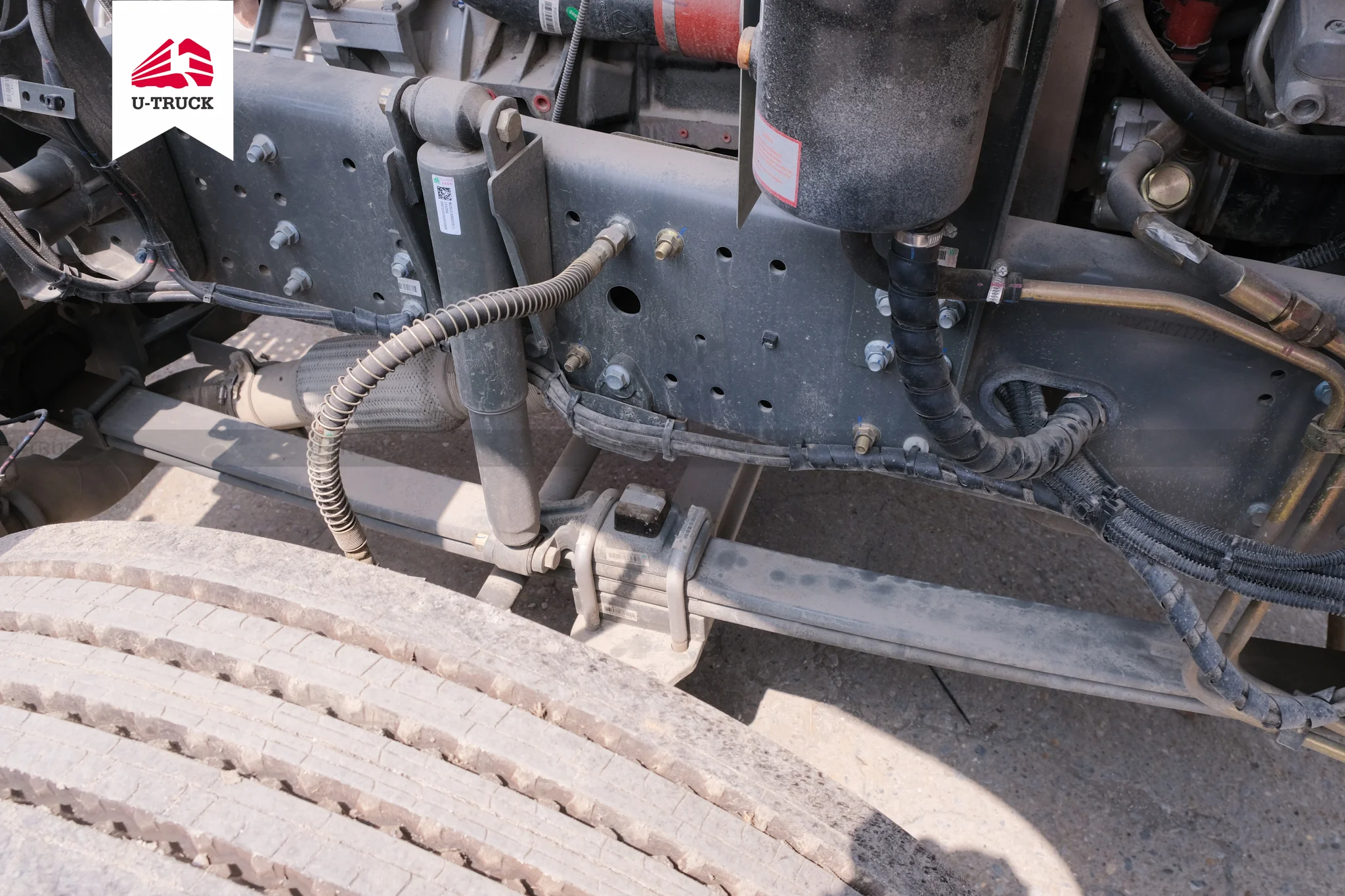
Rubber Bushings – Small Components with a Big Impact
Rubber bushings are used at most suspension mounting points, including the spring eyes, shackles, torque rods, and stabilizer bars. Their primary function is to absorb vibration, allow controlled movement within the suspension system, and prevent direct metal-to-metal contact between connected components.
Over time, rubber bushings deteriorate due to heat, ozone exposure, oil contamination, and repeated loading cycles. As the rubber hardens, cracks, or loses its elasticity, more vibration is transmitted directly to the chassis, while wear on surrounding suspension components accelerates.
Although replacing bushings can be labor-intensive, often requiring a hydraulic press, the cost is far lower than replacing an entire leaf spring assembly, suspension brackets, or even repairing chassis damage caused by prolonged operation with worn bushings.
Torque Rods and Control Arms
In addition to leaf springs and shock absorbers, torque rods play a critical role in locating the axle and transmitting forces generated during acceleration, braking, and cornering.
A torque rod is a steel link that connects the axle housing to the chassis through rubber bushings at both ends. During operation, it is constantly subjected to tensile, compressive, and torsional loads. The most common failures include torn bushings, rubber separating from the steel sleeve, or bushing housings becoming elongated due to repeated loading.
Signs of Worn Torque Rods
- Clunking noises during acceleration or braking.
- The truck tends to pull to one side, especially under heavy loads.
- Noticeable or abnormal axle movement.
If a torque rod becomes bent or fractured, vehicle handling can be significantly compromised. It should be replaced immediately to ensure safe operation.
Air Suspension – A Growing Trend in Modern Trucks
An increasing number of modern trucks are equipped with air suspension systems instead of traditional leaf springs.
Rather than relying on steel leaf springs as the primary load-bearing element, air suspension uses air springs (air bags) to support the vehicle’s weight. This design provides a smoother ride, automatically levels the vehicle under varying loads, and allows ride height adjustment during loading and unloading operations.
Despite these advantages, air suspension systems include several components that require regular inspection, such as:
- Air springs (air bags)
- Height control valves
- Air lines
- Air compressor
Over time, air springs may deteriorate, crack, or develop air leaks. Likewise, a faulty or sticking height control valve can cause the vehicle to lean to one side or fail to maintain the correct ride height.
Front Axle Assembly and Steering Components
The front suspension not only supports vehicle loads but also has a direct impact on steering performance and vehicle control.
The tie rod end is a ball joint that transfers steering input from the steering linkage to the wheels. As the joint wears, symptoms such as steering wheel vibration, poor directional stability, and uneven tire wear may occur.
Another critical component is the kingpin, which serves as the pivot point for the steering knuckle. It supports much of the load acting on the front axle while continuously absorbing impacts from uneven road surfaces. Excessive kingpin wear reduces steering precision and increases the risk of vehicle instability during operation.
Proper Maintenance Extends Suspension Service Life
Routine maintenance is one of the most effective ways to reduce repair costs and prevent major suspension failures.
Key maintenance practices include:
- Lubricate spring pins and suspension pivot points during every scheduled service to minimize friction and wear.
- Clean the leaf spring assembly regularly to remove mud, dirt, and debris that can accelerate wear and corrosion between the spring leaves.
- Inspect the torque of the U-bolts, especially after installing new leaf springs, to ensure the axle remains securely fastened to the suspension.
- Check the bump stops and replace them if damaged to prevent direct impact between the axle and the chassis.
Following these maintenance practices helps preserve the suspension system’s load-carrying capacity, ensures stable vehicle handling, and extends the service life of the entire chassis.
Conclusion
The suspension system is one of the most critical assemblies on a truck, directly affecting load-carrying capability, vehicle stability, ride quality, and operational safety. Regular inspection, maintenance, and timely replacement of components such as leaf springs, shock absorbers, rubber bushings, torque rods, and steering components not only extend vehicle service life but also reduce repair costs and minimize costly downtime.
For trucks that frequently operate on construction sites, mining roads, or other challenging terrains, investing in proper suspension maintenance is a cost-effective strategy that improves long-term reliability, safety, and overall fleet performance.
Featured news


Related news

What Driving License Do You Need to Drive a HOWO Truck?

Review of the HOWO V750L 4×2 6.3-Meter Light-Duty Truck