


What Is Regenerative Braking? How It Works and Its Benefits
Regenerative braking is an essential technology in modern electric and hybrid vehicles. Not only does it help optimize driving efficiency, but it can also convert excess kinetic energy into electrical energy and feed it back into the battery pack for recharging. But do you really understand how this smart braking system works, as well as its practical advantages and disadvantages? Let’s take a closer look at the mechanism and key benefits of regenerative braking in the article below!
What Is Regenerative Braking?
Electric vehicles not only change the way power is generated but also how energy is utilized when the vehicle decelerates. Regenerative braking is an important technology that recovers part of the kinetic energy that would otherwise be converted into heat and lost during braking.
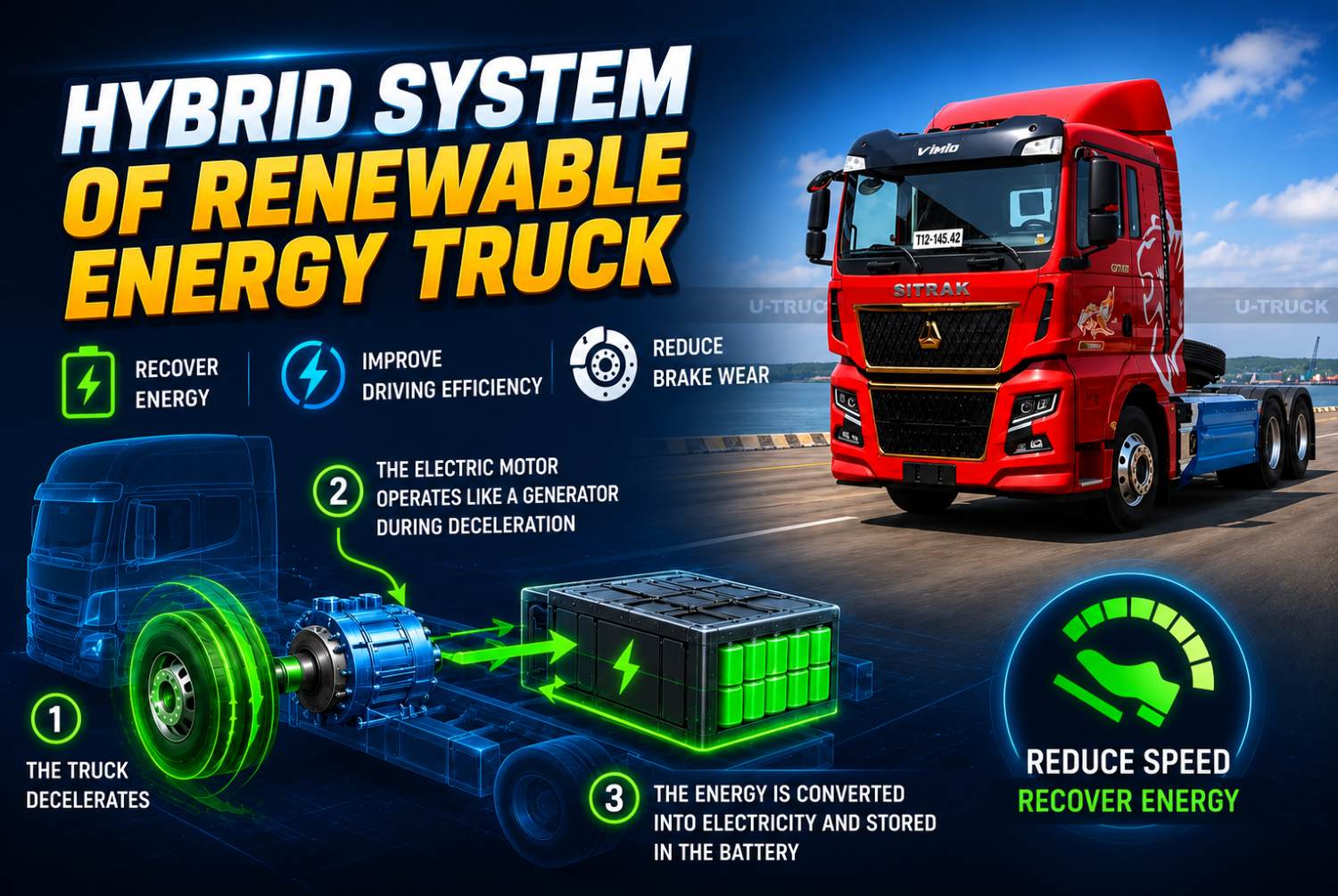
Simply put, when the driver decelerates or releases the accelerator pedal, the electric motor can switch to generator mode. The vehicle’s kinetic energy is converted into electrical energy and fed back into the battery pack. This allows energy to be used more efficiently while helping reduce electricity consumption during operation.
So, how does regenerative braking work? How does it differ from conventional braking, and what benefits does it offer for electric trucks?
How Does Regenerative Braking Work?
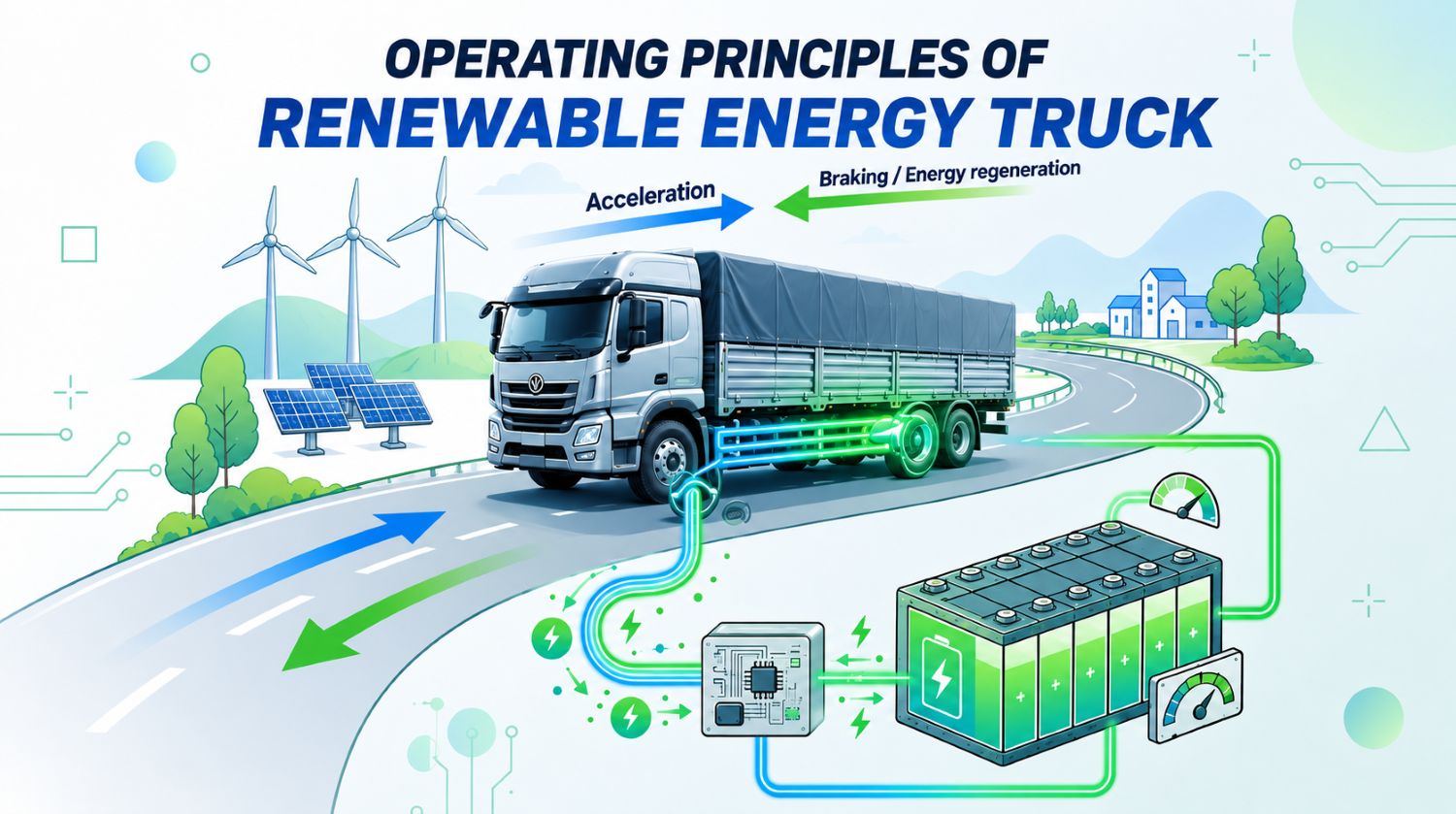
The operating principle of regenerative braking is relatively easy to understand by following the process from vehicle acceleration to deceleration.
When the Vehicle Accelerates
When the driver presses the accelerator, electrical energy from the battery pack is supplied to the electric motor. The motor converts electrical energy into mechanical energy to generate torque, which turns the wheels and propels the vehicle forward. In this state, the electric motor acts as the vehicle’s traction power source.
When the Vehicle Decelerates
When the driver releases the accelerator or applies the brake pedal, the control system can command the electric motor to switch to generator mode. At this point, the driven wheels transfer mechanical energy back to the motor. The motor operates like a generator, converting part of the vehicle’s kinetic energy into electrical energy.
The recovered electricity is then passed through the power electronics system for regulation and fed back into the battery pack, within the operating conditions permitted by the system.
This is the core principle of regenerative braking:
Deceleration → Kinetic energy recovery → Conversion into electrical energy → Energy storage in the battery.
Not All Energy Can Be Recovered
One important point to note is that regenerative braking cannot convert all of the vehicle’s kinetic energy into electrical energy. Energy losses inevitably occur during the conversion process.
In addition, the amount of energy that can be recovered depends on factors such as vehicle speed, battery state of charge, temperature, operating conditions, and the control strategy of each vehicle model.
How Does Regenerative Braking Differ from Conventional Braking?
Traditional friction braking uses components such as brake pads and brake discs or drums to generate resistance. During braking, most of the vehicle’s kinetic energy is converted into heat and released into the environment.
By contrast, regenerative braking uses the electric motor to generate braking force while simultaneously recovering part of the vehicle’s kinetic energy as electrical energy.
| Criteria | Conventional Braking | Regenerative Braking |
|---|---|---|
| Primary Mechanism | Mechanical friction | Electric motor operating as a generator |
| Energy During Deceleration | Primarily converted into heat | Partially recovered |
| Battery Recharging | No | Yes |
| Brake Pad Wear | Yes | Can be reduced under suitable conditions |
| Applications | Internal combustion engine vehicles, electric vehicles | Primarily electric and hybrid vehicles |
In practice, electric vehicles still require a friction braking system. Therefore, regenerative braking does not completely replace mechanical brakes but typically works together with the conventional braking system.
What Are the Benefits of Regenerative Braking?
This is why regenerative braking is receiving increasing attention in electric vehicles in general and electric trucks in particular.
More Efficient Use of Energy
In vehicles that rely on friction brakes, a significant portion of the kinetic energy generated during deceleration is converted into heat. In electric vehicles, regenerative braking allows some of this energy to be recovered and reused.
The amount of electricity recovered is not always substantial, but when a vehicle decelerates frequently, the total amount of regenerated energy can become significant. This benefit can be particularly noticeable when vehicles operate frequently in urban environments, where they constantly accelerate and decelerate.
Improved Energy Efficiency
The recovered energy can be fed back into the battery pack and used again during subsequent operation. As a result, regenerative braking contributes to improving the overall energy efficiency of an electric vehicle.
However, actual energy savings are not fixed and depend on various factors, including vehicle load, route, speed, and driving style.
Reduced Use of Friction Brakes
When regenerative braking provides sufficient braking force to meet the required deceleration, the friction brakes may not need to work as frequently as they would in some situations on conventional vehicles.
This can help reduce wear on friction brake components under suitable operating conditions. However, mechanical brakes remain essential and must always be ready when greater braking force is required or when regenerative braking cannot provide sufficient braking performance.
Factors Affecting Energy Regeneration
A vehicle does not recover the same amount of energy every time it brakes. The effectiveness of regenerative braking is influenced by several factors.
Battery State of Charge
When the battery pack is already highly charged, its ability to accept additional energy may be limited. In this situation, the system may reduce regenerative braking to protect the battery and maintain safe operating conditions.
Speed and Road Conditions
Vehicle speed, road gradient, surface conditions, and the frequency of deceleration all affect the amount of kinetic energy that can be recovered.
Vehicle Load
The heavier the vehicle, the greater its kinetic energy while in motion. However, this does not mean that the amount of recovered electricity will always increase proportionally, as regenerative braking is also limited by the motor, battery, and power electronics system.
Driving Style
A driving habit of accelerating aggressively and then braking hard is not the most efficient way to utilize regenerative braking. Proactively releasing the accelerator and decelerating smoothly can help make energy recovery more efficient and comfortable under suitable conditions.
Can Regenerative Braking Completely Replace Mechanical Brakes?
Regenerative braking cannot completely replace mechanical brakes. On modern electric and hybrid vehicles, regenerative braking works alongside the mechanical braking system to ensure safety.
Regenerative braking and friction braking typically work together. Regenerative braking provides deceleration and recovers energy within the limits of the system. Meanwhile, mechanical brakes remain necessary to ensure the vehicle can stop safely when greater braking force is required or when regenerative braking is limited.
The vehicle’s control system distributes braking force between the two mechanisms according to the specific driving conditions. Therefore, drivers still need to inspect and maintain the braking system according to the manufacturer’s recommendations.
Should You Consider Regenerative Braking When Choosing an Electric Truck?
Yes, but it should not be the only criterion. When choosing an electric truck, owners should evaluate the overall package, including battery capacity, driving range, payload, motor power, charging capability, route conditions, and braking system.
In particular, it is important to understand how regenerative braking is configured on the specific truck model you are considering. Regenerative braking capacity, driving modes, and the level of regenerative braking intervention can vary between different vehicle models.
Conclusion
Regenerative braking is a technology that enables electric vehicles to use energy more efficiently. Instead of allowing all kinetic energy generated during deceleration to be converted into heat through friction brakes, the system can recover part of this energy, convert it into electricity, and feed it back into the battery pack.
For electric trucks, this technology is particularly valuable when vehicles frequently accelerate and decelerate, operate in urban environments, or travel on routes with numerous downhill sections.
However, regenerative braking does not completely replace mechanical brakes, and its energy recovery efficiency depends on actual operating conditions. Understanding how the system works and operating the vehicle appropriately can help maximize the benefits of this technology while contributing to better operating efficiency and longer service life of related components.
Featured news




Related news

What Driving License Do You Need to Drive a HOWO Truck?