
Should You Choose a 4×2 or 6×4 Tractor Truck? A Detailed Comparison
Are you unsure whether to choose a 4×2 or 6×4 tractor truck for container transportation, semi-trailer hauling, or long-distance freight operations? This is a practical question because choosing the wrong configuration can result in excess power and unnecessary costs, or insufficient traction when frequently carrying heavy loads or climbing steep gradients. Join U-TRUCK as we compare 4×2 and 6×4 tractor trucks to help you select the right model for your business needs and budget.
What Are 4×2 and 6×4 Tractor Trucks?
The first thing to understand is that in the terms “4×2” and “6×4” tractor trucks, the numbers generally refer to the number of wheel positions and driven wheel positions, respectively. A driven axle is an axle that receives power from the engine and transmits it to the wheels.
4×2 Tractor Truck – Single Driven Axle Configuration
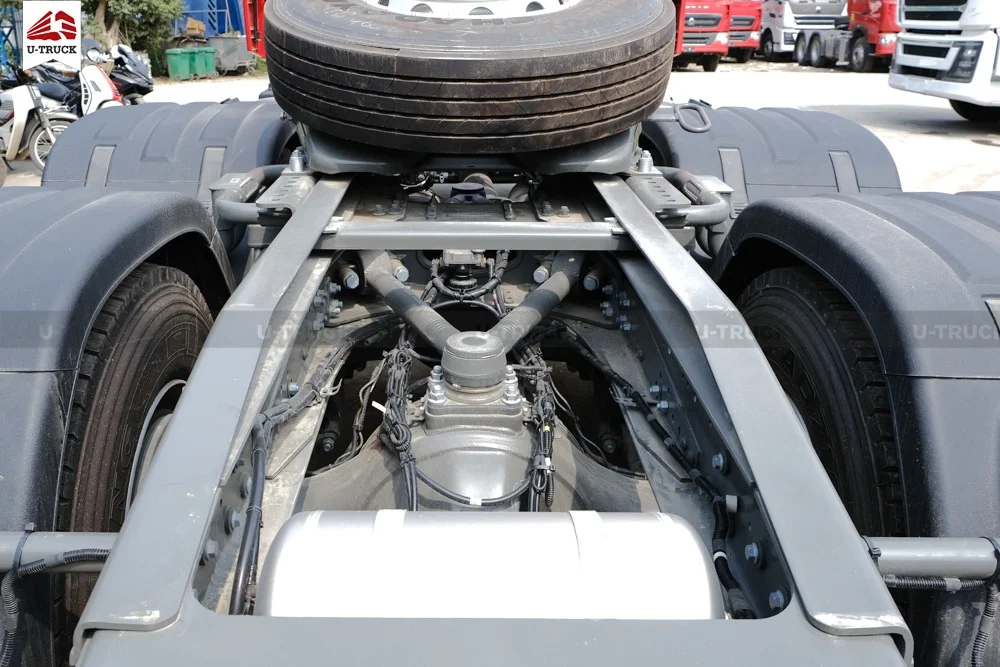
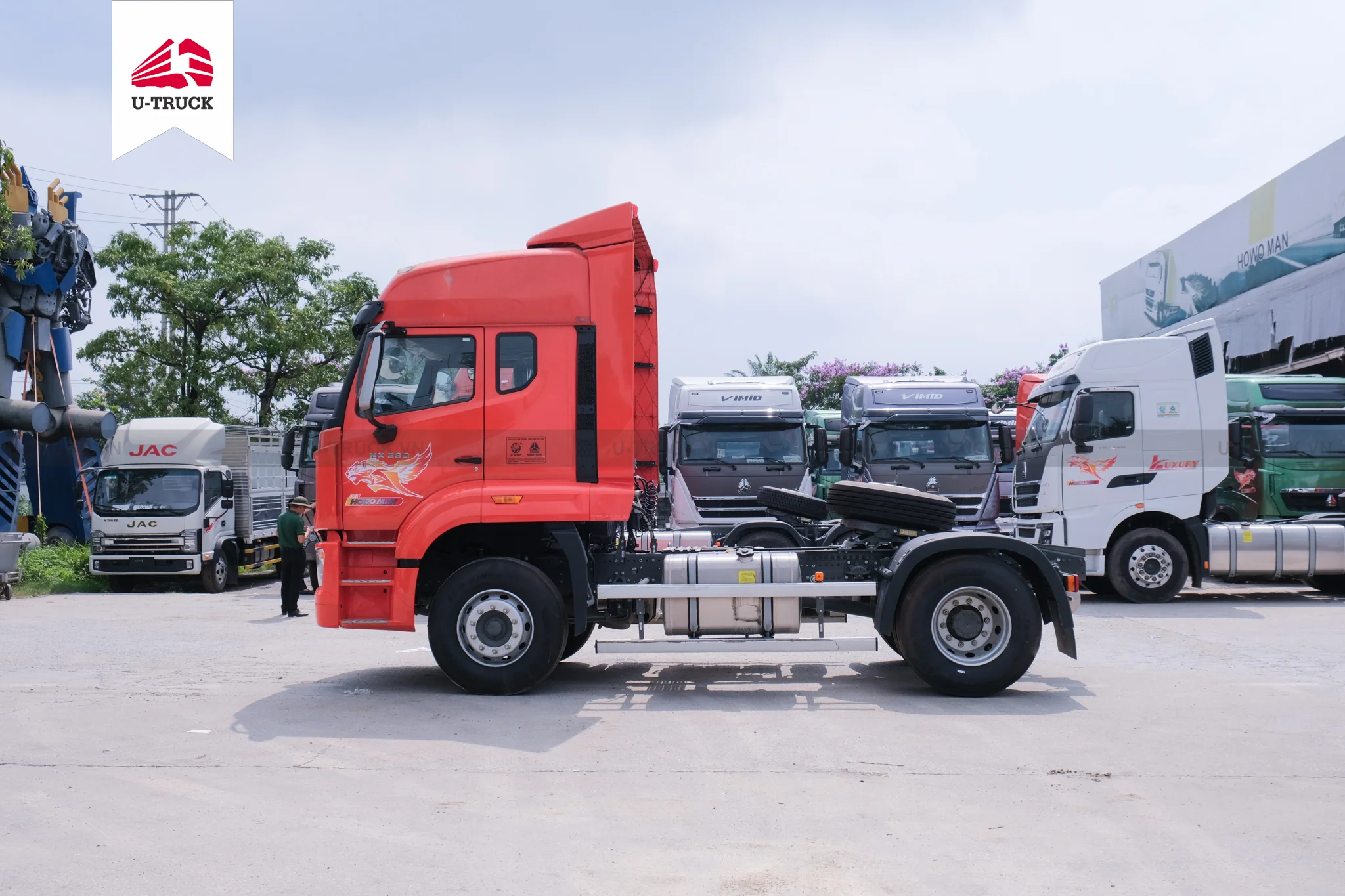
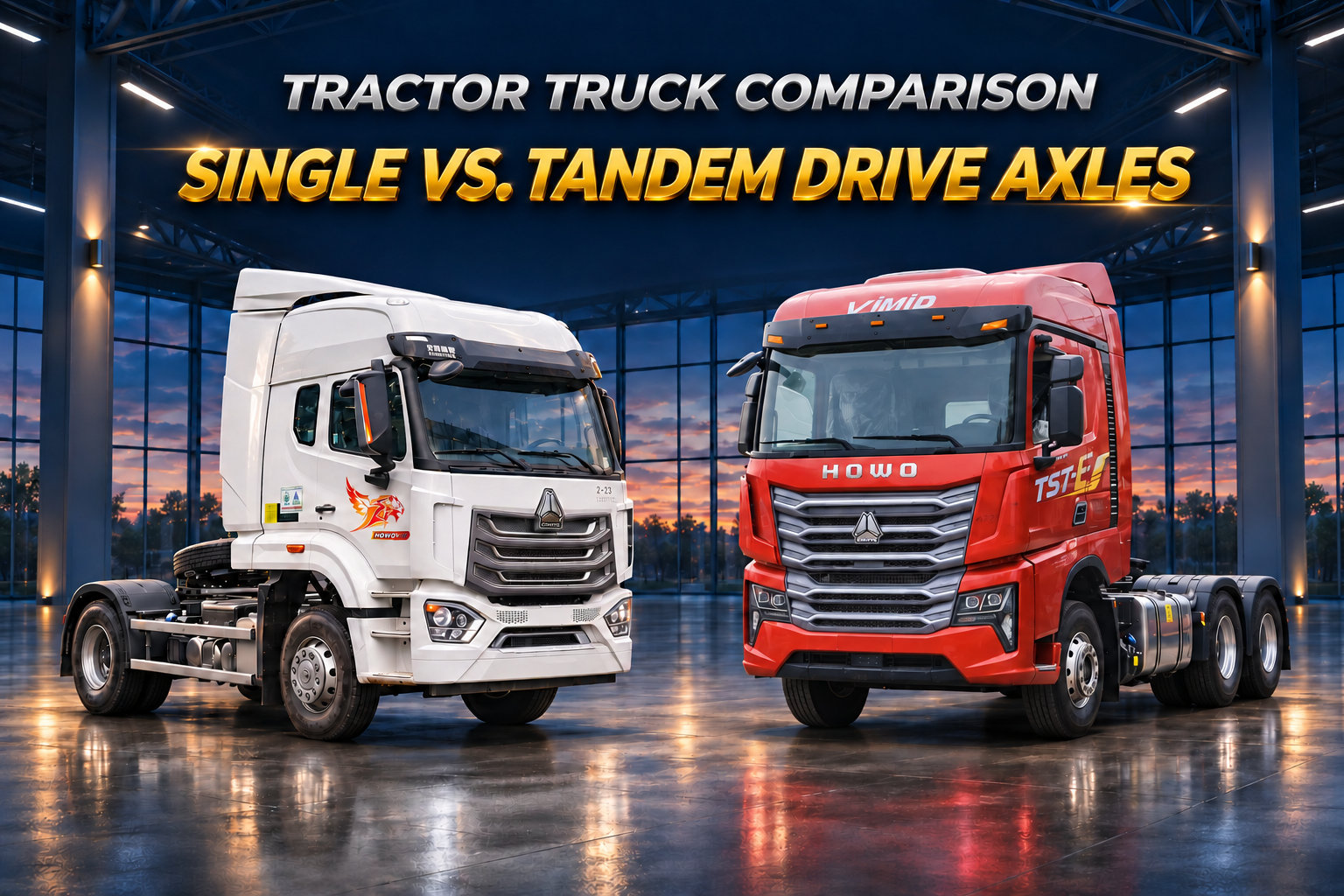
A 4×2 tractor truck typically has two axles, with one driven axle, usually the rear axle. The 4×2 wheel arrangement indicates that the vehicle has four wheel positions, two of which are driven. This configuration has a simpler drivetrain, generally lower curb weight, and is suitable for many flat-road routes, as well as port and warehouse operations.
6×4 Tractor Truck – Two Driven Axle Configuration
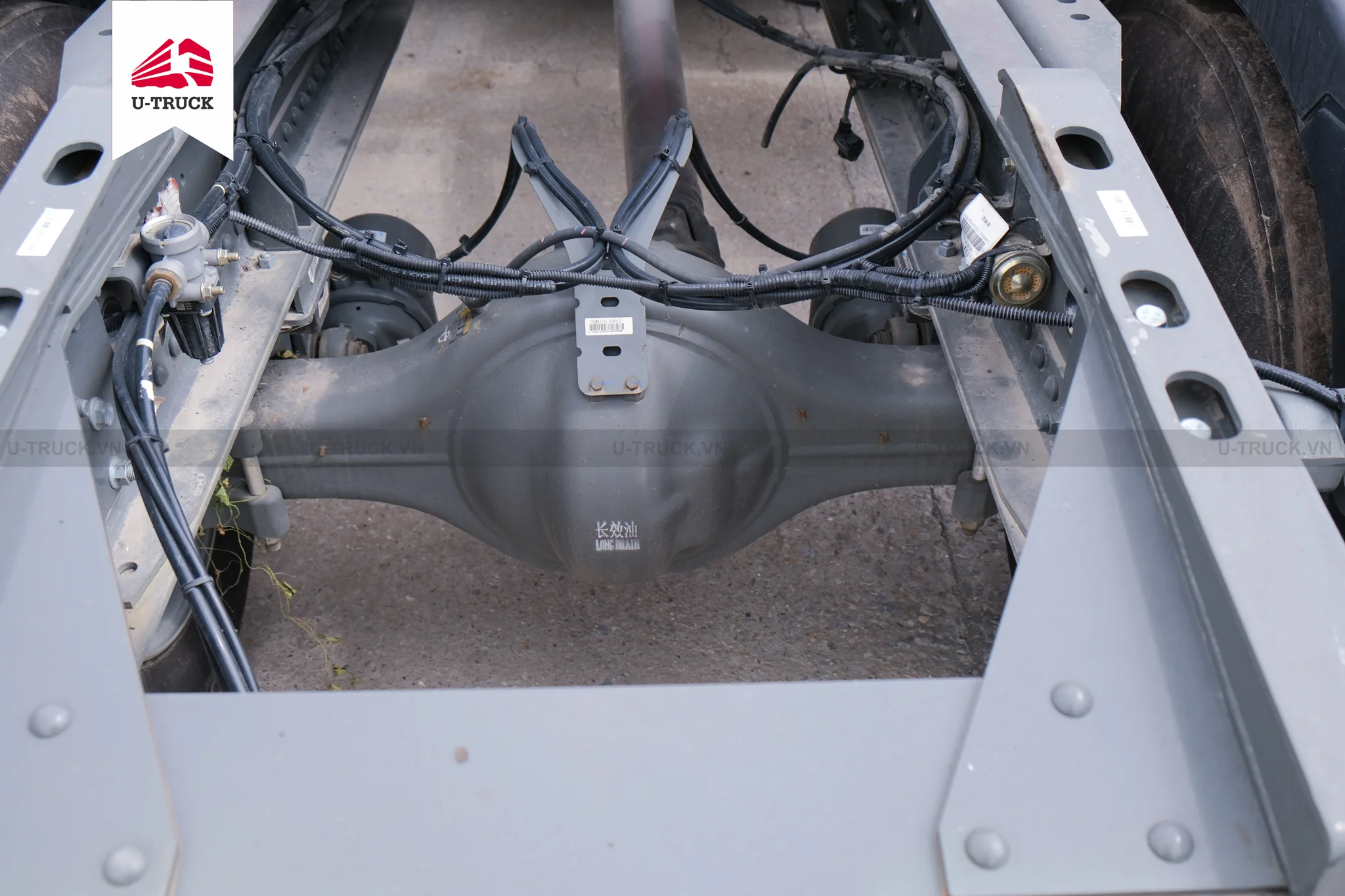
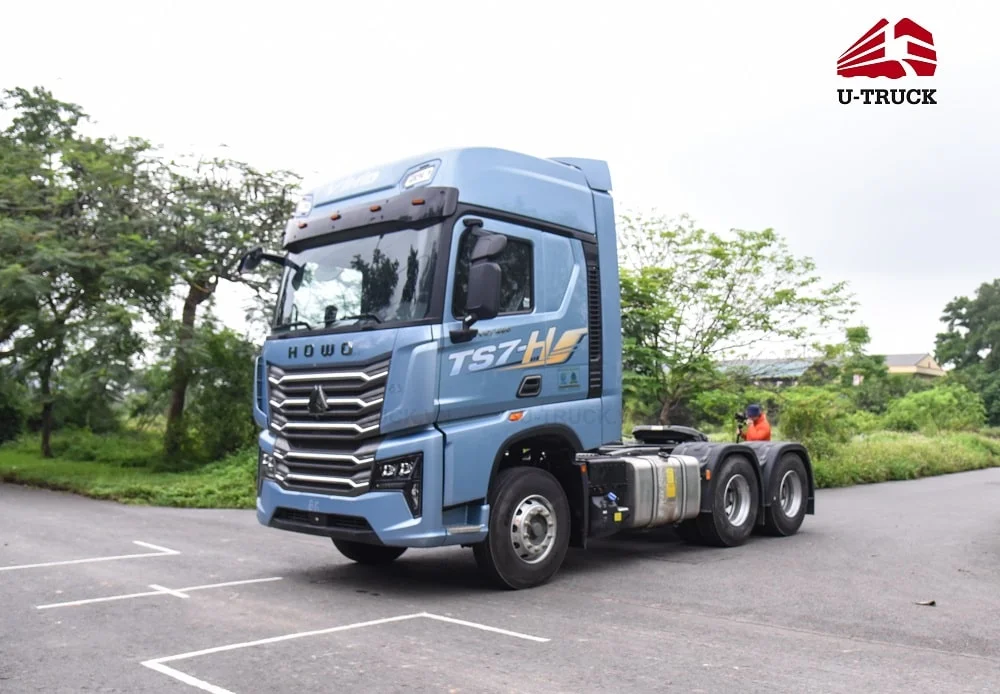
A 6×4 tractor truck typically has three axles, with both rear axles driven. This configuration is commonly found in tractor trucks designed for container transportation and heavy-duty hauling. Since both driven axles transmit power to the road, the truck can deliver greater traction under various conditions, particularly when starting with a heavy load or traveling on surfaces with poor grip.
However, compared with an equivalent 4×2 tractor truck, a 6×4 model generally has a higher curb weight, more drivetrain components, and higher operating costs.
Comparison Table: 4×2 vs. 6×4 Tractor Trucks
| Criteria | 4×2 Tractor Truck (Typically Single Driven Axle) | 6×4 Tractor Truck (Typically Two Driven Axles) |
|---|---|---|
| Number of axles | 2 axles | 3 axles |
| Number of driven axles | 1 axle | 2 axles |
| Main advantage | Compact drivetrain with potential cost savings | More driven axles, providing better traction for heavy loads |
| Curb weight | Generally lighter when comparing trucks in the same segment | Generally heavier due to the additional axle and drivetrain components |
| Suitable road conditions | Flat roads, good road surfaces, and fixed routes | Long-distance routes, mixed road conditions, steep gradients, and challenging operating sites |
| Suitable applications | Light to medium loads and port-to-warehouse transportation within suitable load limits | Heavy container transportation, semi-trailer hauling, and routes requiring high traction |
| Fuel and maintenance costs | Potentially lower under equivalent operating conditions | Potentially higher, but offers greater capability for demanding applications |
| Initial investment | Generally more affordable when comparing equivalent configurations | Generally higher due to the drivetrain and additional equipment |
When Should You Choose a 4×2 Tractor Truck?
Not every transport business needs a 6×4 tractor truck. If the cargo, routes, and operating intensity are suitable, a 4×2 tractor truck can be a cost-effective option.
Port, Warehouse, and Flat-Road Operations
A 4×2 tractor truck is worth considering when operating primarily on flat surfaces, with few steep gradients and convenient access to turning areas and loading yards. Some businesses that regularly transport empty containers, light cargo, or loads within the vehicle’s permissible limits on port-to-warehouse routes can benefit from its compact configuration.
Lower Initial Investment and Operating Costs
Having one driven axle generally means a drivetrain with fewer components than a two-driven-axle configuration. Under comparable conditions, this can help reduce curb weight, drivetrain losses, and certain maintenance costs. However, actual savings also depend on the engine, gear ratios, load, speed, tires, and driving style.
Suitable Loads Without Frequent Heavy-Duty Hill Climbing
If operating routes are stable and the gross combination weight remains within permitted limits, a 4×2 tractor truck is not necessarily underpowered. However, if routes frequently involve starting on steep gradients, slippery surfaces, or heavy loads, you should assess actual traction and towing capability before making a decision.
When Should You Choose a 6×4 Tractor Truck?
For businesses specializing in heavy cargo, operating across diverse routes, or frequently traveling through challenging terrain, 6×4 tractor trucks generally offer a clearer advantage in terms of power delivery and traction.
Hauling Heavy Containers and Semi-Trailers Across Different Routes
Two driven axles help distribute traction across more wheels. This is particularly useful when the vehicle starts with a high gross combination weight, moves at low speeds, or has to navigate road sections with uneven traction.
Transportation on Steep Gradients or Challenging Roads
When climbing a hill, a truck needs sufficient engine power, torque, appropriate gear ratios, and traction. With two driven axles, a 6×4 tractor truck is better suited to routes involving steep gradients, construction sites, or loading yards with less-than-ideal surface conditions.
Fleets Requiring Flexibility Across Different Transport Tasks
If a truck is used for container transportation on flat routes one day and heavy semi-trailer hauling or mixed-terrain operations the next, a 6×4 tractor truck can provide greater operational flexibility.
Choosing a 4×2 or 6×4 Tractor Truck Based on Operating Costs
From a cost perspective, choose a 4×2 model if most of your cargo is relatively light, your routes are flat, and optimizing cash flow is a priority. Choose a 6×4 model if heavy loads, steep gradients, or challenging routes are frequent enough to justify the additional investment and operating costs.
To make a practical comparison between 4×2 and 6×4 tractor trucks, businesses should evaluate the Total Cost of Ownership (TCO) and operating costs per trip or per ton of cargo. Key cost components include:
- On-road vehicle cost: Purchase price, registration, insurance, and financing costs if purchasing through an installment plan.
- Fuel consumption: Liters per 100 km measured on the same route and under the same load conditions, rather than relying on advertised figures.
- Maintenance and tires: Maintenance schedules, the number of axles, and the tires requiring servicing or replacement.
- Operating productivity: Trips per day, loading and unloading downtime, and the ability to fulfill cargo contracts.
- Operating risks: Road gradients, road conditions, weather, and the possibility of having to change routes.
For example, if a truck operates on a fixed port-to-warehouse route with good road conditions and primarily carries light cargo, the cost advantages of a 4×2 tractor truck may be significant. If a business frequently hauls heavy containers across challenging terrain, prioritizing a 6×4 tractor truck may be more reasonable, even with a higher initial investment.
Some Current 4×2 and 6×4 Tractor Truck Models
4×2 Tractor Trucks
| Product | Key Features |
|---|---|
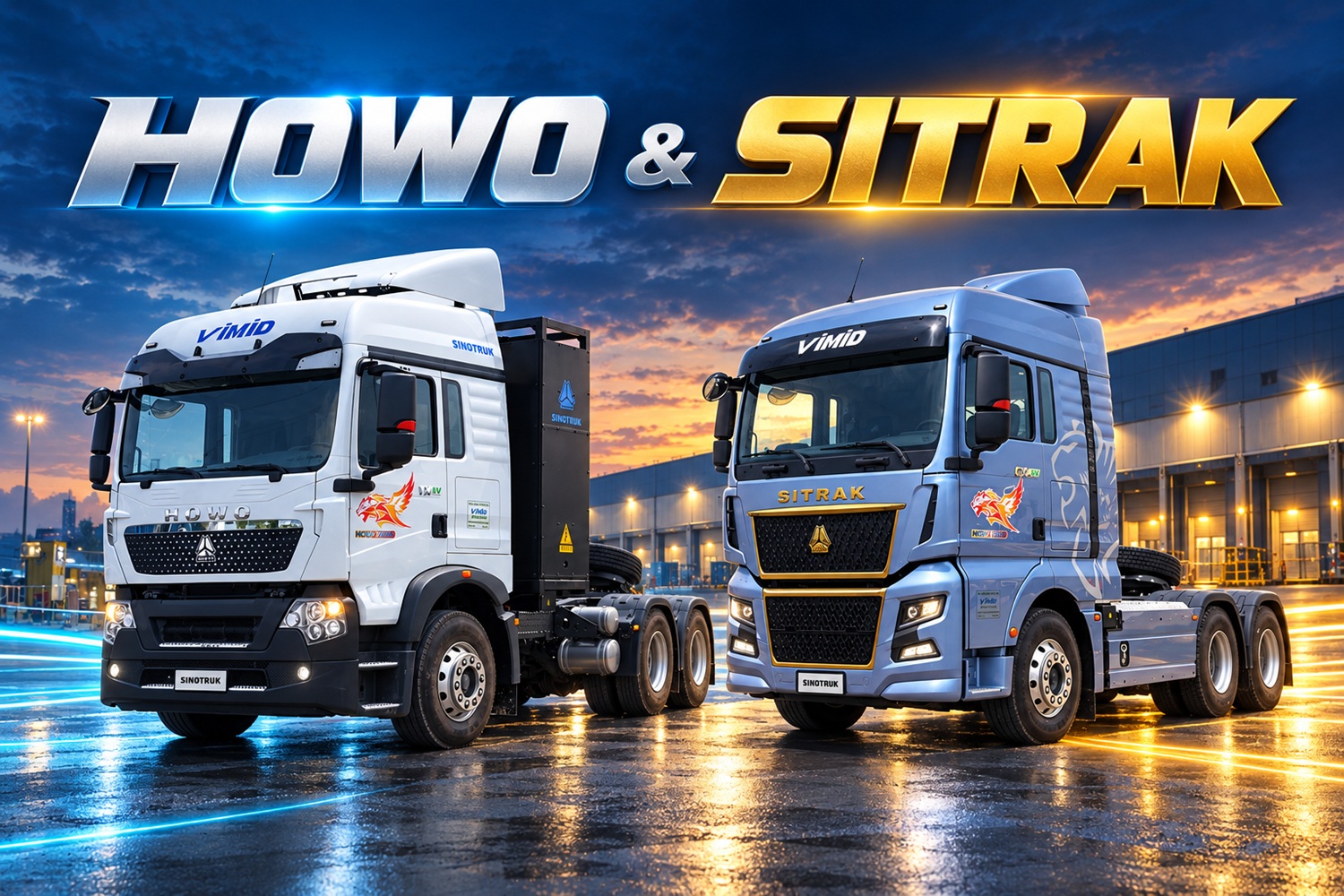
| HOWO NX 280 with Hub-Reduction Axles | 280 HP MAN engine; compact 4×2 design; fuel-efficient operation. |
| HOWO NX 310 with Hub-Reduction Axles | 310 HP engine; durable MAN axle; flexible operation. |
6×4 Tractor Trucks
| Product Name | Key Features |
|---|---|
| SITRAK G7S 540 Tractor – Hub Reduction Rear Axles | 540 HP MAN engine; three-layer chassis; premium cab with 360-degree camera. |
| Howo TS7-E 460HP Tractor – Single Reduction Rear Axle | New-generation 460 HP MAN engine; durable drivetrain; optimized operating costs. |
| TH7 DX 460 Tractor – Single Reduction Rear Axle | 460 HP engine; upgraded from the T7H series; optimized investment costs. |
| Howo TS7 460HP Tractor – Single Reduction Rear Axle | 460 HP MAN engine; 360-degree camera, tire pressure monitoring system, Apple CarPlay, and ventilated air-suspension seat. |
| Howo V7-X 440HP Tractor – Single Reduction Rear Axle | 440 HP MAN engine; Volvo-inspired design; two-sleeper cab. |
| HOWO TH7 LX 460 Hub-Reduction rear Axles | 460 HP MAN engine; Luxury interior; 12.3-inch display and 360-degree camera. |
| JAC Q7 480 Tractor – Hub Reduction Rear Axle | 480 HP engine; heavy-duty single-reduction axles; spacious Q7 cab. |
| JAC Q7 480 Tractor – Single Reduction Axle, Automatic Transmission | 480 HP Yuchai engine; FAST automatic transmission; ABS and ESC safety systems. |
| JAC Q7 420 Tractor – Single Reduction Axle | 420 HP engine; heavy-duty single-reduction axles; suitable for heavy-duty transport and steep-gradient routes. |
| Howo TH7 LX 460HP – Single Reduction Rear Axle | 460 HP MAN engine; MCP16ZG single-reduction axles; premium Luxury interior. |
| JAC Q7 420 Tractor– Hub Reduction Rear Axle | 420 HP Yuchai engine; multifunction steering wheel; 360-degree camera. |
| HOWO NX 440 Single-Reduction Axles | 440 HP MAN engine; MCP16ZG single-reduction axles; suitable for dump semi-trailers and heavy cargo. |
| HOWO NX 440 Hub-Reduction Axles | 440 HP MAN engine; power-assisted transmission; optimized curb weight and fuel consumption. |
| HOWO T7H 440 Hub-Reduction Axles | 440 HP MAN engine; durable drivetrain; suitable for long-distance container transportation. |
| HOWO T7H 440 Single-Reduction Axles | 440 HP engine; heavy-duty single-reduction axles; suitable for challenging terrain. |
| JAC A5 480 Hub-Reduction Axles and 12.00R20 Tires | 480 HP Yuchai engine; AK459 axles; 12.00R20 tube-type tires with good load-bearing capacity. |
| JAC A5 480 Hub-Reduction Axles and 12R22.5 Tires | 480 HP Yuchai engine; 12R22.5 tubeless tires; modern A5 cab. |
5 Questions to Answer Before Buying a Tractor Truck
What Type of Cargo Will You Carry, and How Much Does It Weigh?
Calculate the total combination weight, including the tractor truck, semi-trailer, and cargo. Check the permitted trailer towing weight and fifth-wheel load specified in the vehicle documentation. Do not rely solely on engine horsepower or the number of driven axles when making your decision.
Do Your Routes Include Steep Gradients or Poor Road Conditions?
If most routes involve flat expressways and national highways, a 4×2 configuration is worth considering. If you frequently travel on steep gradients, muddy yards, or construction sites, a 6×4 model may be more suitable. However, you should still check the tires, gear ratios, and available traction.
How Many Kilometers Does the Truck Travel Each Month?
For trucks with high monthly mileage, differences in fuel consumption, tire costs, and maintenance downtime become increasingly significant. Compare the Total Cost of Ownership rather than focusing only on the initial purchase price.
Do You Frequently Change Semi-Trailer Types or Cargo Routes?
The more diverse your transport tasks, the more important it is to allow for configuration flexibility. If the truck operates on just one fixed route, choosing a model with sufficient towing capability for that specific task can help reduce costs considerably.
What Is Your Total Investment and Operating Budget?
In addition to the purchase price, budget for fuel, driver costs, insurance, maintenance, and monthly installments if applicable. U-TRUCK provides advice on vehicle configurations and financing support policies available at the time of purchase. Contact Hotline 0816808899 for more information.
Conclusion: Should You Buy a 4×2 or 6×4 Tractor Truck?
If your business primarily operates on flat roads, carries loads within suitable limits, runs fixed port-to-warehouse routes, and prioritizes cost optimization, a 4×2 tractor truck is a suitable choice. If you frequently haul heavy cargo, climb steep gradients, operate on mixed terrain, or require greater traction, a 6×4 tractor truck is generally the better option.
Still unsure whether to choose a 4×2 or 6×4 tractor truck? Provide your routes, cargo type, gross combination weight, and budget so U-TRUCK can recommend a suitable model. Call 081 680 8899 for technical specifications, price quotations, and purchasing solutions tailored to your actual operating needs.
Featured news

Related news