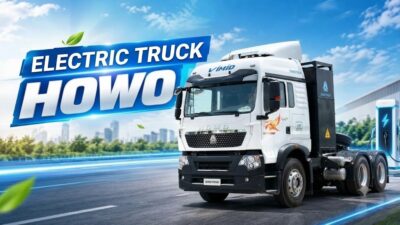


18-Minute Ultra-Fast Charging Technology for HOWO Electric Trucks
HOWO Electric Trucks Feature 2C Ultra-Fast Charging Technology
In transportation operations, particularly urban freight delivery, vehicle downtime directly affects the number of trips that can be completed each day. If charging takes too long, businesses may need to adjust delivery schedules or increase fleet size to handle the required transportation volume. With ultra-fast charging technology, businesses can take advantage of breaks between shifts, loading and unloading periods, or waiting times between orders to replenish battery power.
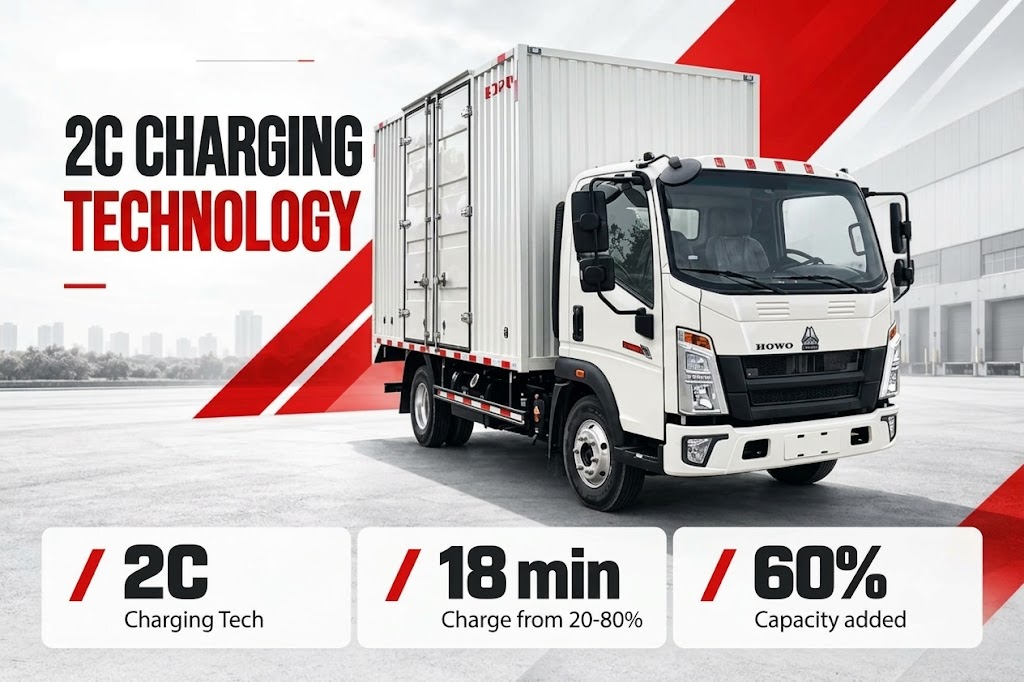
According to information published by Yunshuren, the HOWO Tongshuai electric truck series uses 2C ultra-fast charging technology, enabling the battery to be recharged in a short period. 2C charging refers to a charging rate equivalent to twice the battery’s nominal capacity per hour. For example, in theory, a 100 kWh battery pack charging at 2C corresponds to a charging power of approximately 200 kW.
However, this power level is not maintained at a constant rate throughout the entire charging process. Actual charging power also depends on battery temperature, state of charge (SOC), battery pack limitations, and the power supply capacity of the charging station.
With a reported charging time of approximately 18 minutes to increase the battery’s state of charge from 20% to 80%, the HOWO electric light-duty truck can significantly reduce the time spent waiting to recharge compared with configurations using lower-power charging technology.
HOWO Integrates a 4-Level Energy Recovery System
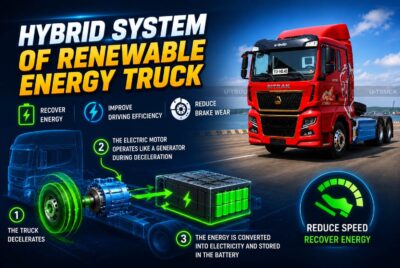
In addition to fast-charging technology for electric trucks, the HOWO Tongshuai is also equipped with an energy recovery system featuring four adjustable levels. This technology converts part of the vehicle’s kinetic energy into electrical energy during deceleration, feeding it back into the battery pack. According to published information, the system can achieve an energy recovery rate of over 10% under the manufacturer’s evaluation conditions.
One notable feature is the ability to adjust the energy recovery level according to the vehicle’s operating conditions. When the truck is carrying a heavy load, the system can use a higher energy recovery level to make better use of deceleration. Conversely, when the truck is unloaded, drivers can select a lower recovery level to reduce the braking effect and improve driving smoothness.
For electric trucks that frequently operate in urban areas with frequent acceleration and deceleration, regenerative braking can help reduce electricity consumption.
Thermal Management System Supports Fast Charging and Protects the Battery
One of the key challenges in developing ultra-fast charging technology is controlling battery pack temperature. When a battery receives a high charging current, the amount of heat generated can increase. Without proper temperature control, excessive heat may affect charging speed, efficiency, and battery lifespan.
To address this issue, HOWO has developed a liquid-based thermal management system that supports both cooling and heating.
Key features of the system include:
Liquid cooling: The temperature can be up to 15°C lower than that of an air-cooling solution under the comparable conditions presented.
Reduced charging time: Published information indicates that the system can reduce charging time by more than 20 minutes compared with the reference solution.
Battery heating: Helps improve temperature uniformity when operating in cold environments.
Low-temperature adaptability: The system is reported to support charging at ambient temperatures as low as -30°C.
In Vietnam, electric trucks often operate in high-temperature environments, particularly during summer or in areas such as seaports, warehouses, and industrial parks. When vehicles transport goods continuously, their battery packs must undergo repeated charging and discharging cycles. Therefore, maintaining an appropriate operating temperature is essential for ensuring performance and limiting power reductions caused by overheating.
For transportation businesses, an effective thermal management system not only supports fast charging but also contributes to battery stability and service life over long-term operation.
IP68-Rated Electrical Systems Designed for Reliable Operation
In addition to charging speed and energy efficiency, HOWO places considerable emphasis on the reliability of its electric truck systems. According to published information, the three main electrical components—the battery, electric motor, and controller—have an IP68 protection rating or higher for the components specified.
The IP68 rating indicates protection against dust ingress and water ingress under defined testing conditions. Notably, HOWO also uses an integrated controller that combines multiple functions, reducing the number of components and connection points in the electrical system.
According to the manufacturer’s assessment, this integrated solution can reduce potential failure points by approximately 30%. In addition, the system has undergone validation across multiple test regions, with a cumulative distance of more than 1 million kilometers. These measures are intended to improve vehicle reliability, minimize downtime caused by technical faults, and support frequent vehicle utilization.
Ultra-Fast Charging Technology Creates New Opportunities for Electric Trucks in Vietnam
HOWO’s continued development of fast-charging technology for electric light-duty trucks reflects the growing emphasis on improving energy replenishment in the commercial transportation industry. For the Vietnamese market, this technology could offer several notable benefits.
Improving Vehicle Utilization Efficiency
For freight and delivery businesses, a truck with fast-charging capability makes it easier to schedule multiple operating shifts. Instead of allocating long periods for charging, vehicles can use short breaks to replenish their batteries, reducing waiting time and increasing utilization potential.
Increasing Flexibility in Transportation Operations
Fast charging enables businesses to respond more flexibly to unplanned orders or changes in delivery routes. This is particularly valuable for consumer goods transportation, e-commerce logistics, and freight distribution between transit warehouses.
Creating New Requirements for Charging Infrastructure
Despite its benefits, ultra-fast charging can only deliver its full potential when supported by suitable infrastructure. To achieve high charging speeds, charging stations must meet requirements for power output, communication protocols, power supply capacity, and compatibility with the vehicle’s battery system.
Conclusion
2C ultra-fast charging technology, which enables the battery to charge from 20% to 80% in approximately 18 minutes, is a notable feature of the HOWO electric truck series. For transportation businesses in Vietnam, advances in fast-charging technology offer new prospects for adopting electric trucks in freight delivery and logistics operations.
Currently, HOWO electric tractor trucks are already operating in the Vietnamese market. For product consultation, please contact U-Truck via hotline 0816808899 to learn more about the available models.