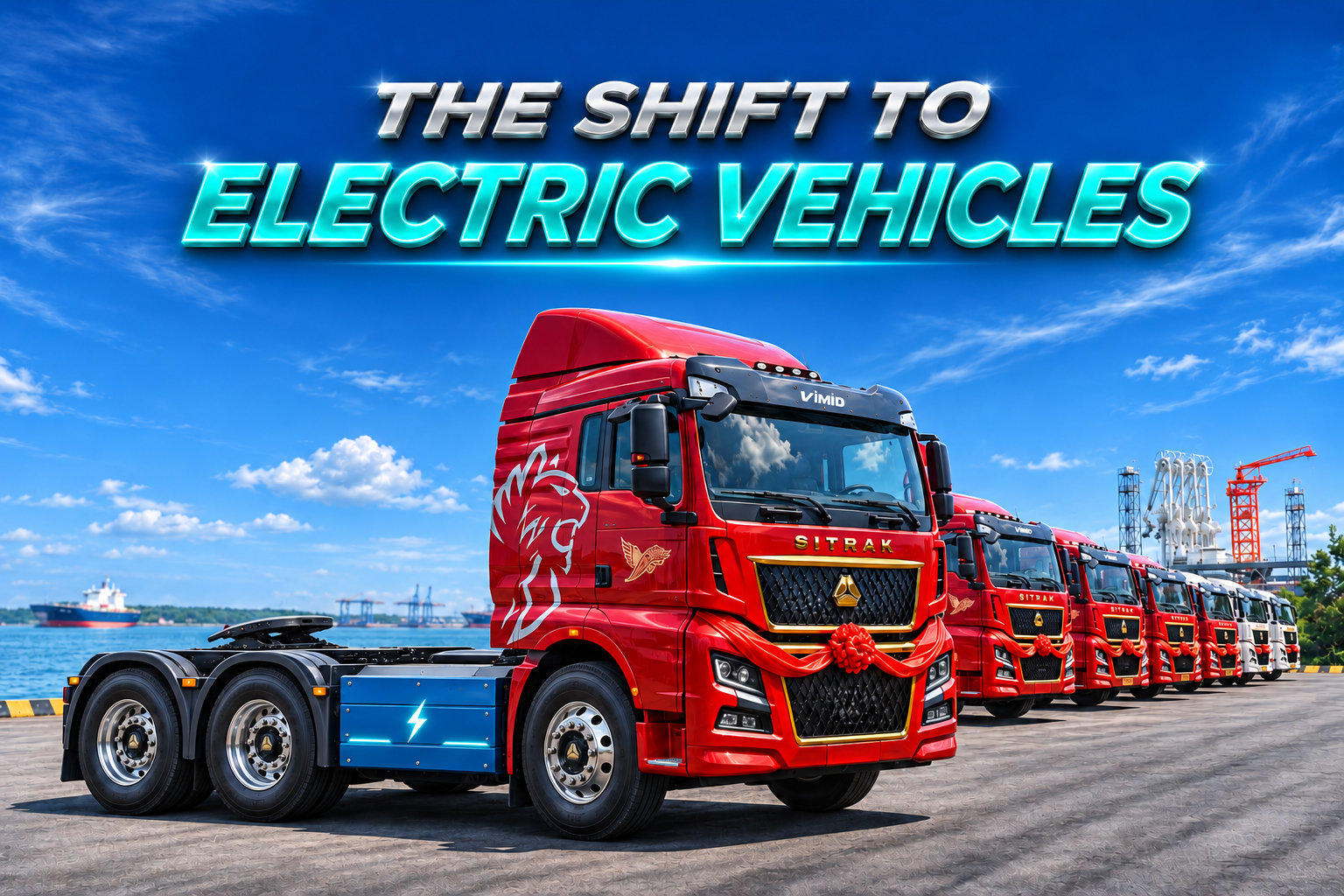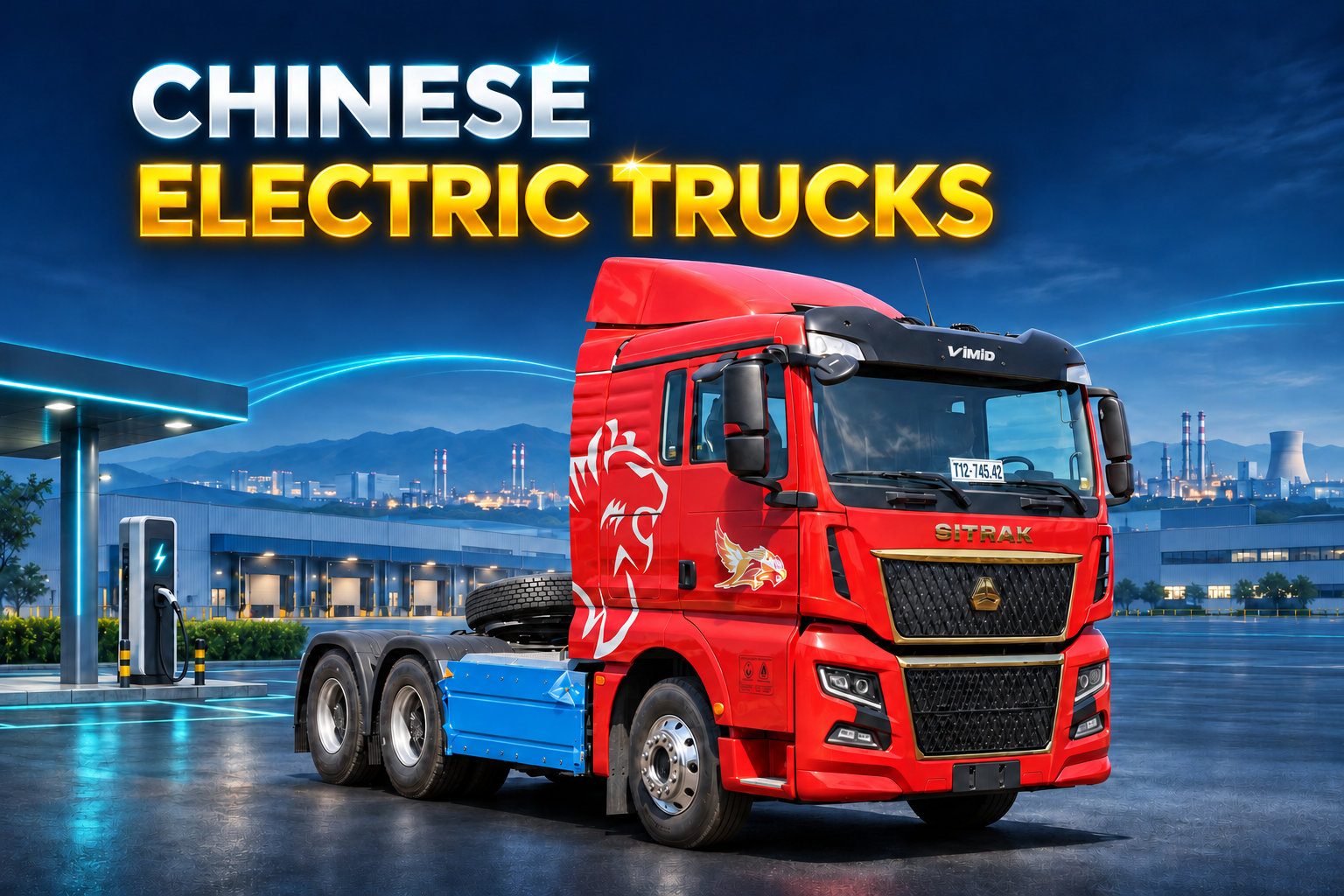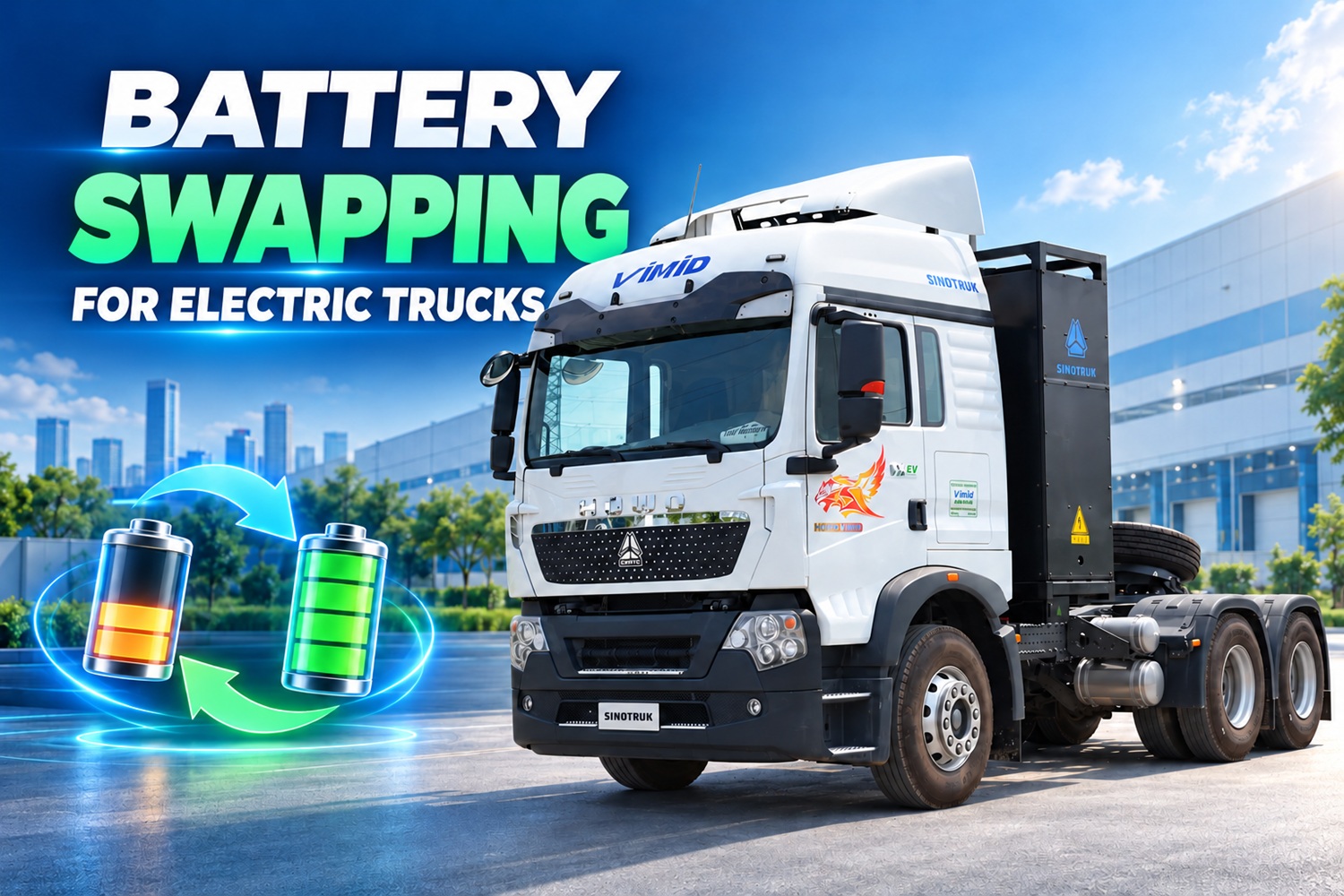


Comparing Three HOWO Electric Tractor Trucks: V9 EV, G7X EV, and TX EV
The HOWO V9 EV 600 kWh is suitable for businesses that require substantial energy reserves and operate on long-distance routes. The SITRAK G7X EV 342 kWh stands out for its premium cabin, safety features, and suitability for short- to medium-distance fixed routes. The HOWO TX EV 400 kWh offers a balanced combination of battery capacity, drivetrain performance, and suitability for interprovincial logistics. However, the most suitable choice ultimately depends on actual payload requirements, distance traveled per shift, charging downtime, and investment costs.
All three models belong to SINOTRUK’s heavy-duty electric tractor truck segment and are distributed by U-TRUCK. Although they all run on electric power, each model is designed with a different focus in terms of tractive performance, energy storage capacity, cabin equipment, and operating conditions.
Specifications Comparison: HOWO V9 EV, G7X EV, and TX EV Electric Tractor Trucks
| Criteria | HOWO V9 EV 600 kWh Single-Reduction Axle | SITRAK G7X EV 342 kWh High-Roof | HOWO TX EV 6×4 400 kWh |
|---|---|---|---|
| Axle configuration | 6×4 | 6×4 | 6×4 |
| Battery capacity | 600 kWh | 342 kWh | 400 kWh |
| Battery type | LFP, CATL | LFP, SINOTRUK Lithium, according to the product page | LFP, SINOTRUK Lithium |
| Maximum motor power | 575 kW | 550 kW (2 × 275 kW) | 520 kW |
| Published maximum torque | 3,060 Nm | 2 × 500 Nm at the motor assemblies | 3,000 Nm |
| Transmission | AMT, 4 forward gears / 2 reverse gears | AMT, 2 forward gears / 1 reverse gear | 6-speed AMT |
| Front axle | VGD95, 9.5 tonnes | VGD71S, 7.1 tonnes | 7.1 tonnes |
| Rear axle | MCP16ZG, 16 tonnes | MCE12ZG, 12 tonnes | Rear axle assembly rated up to 13 tonnes |
| Reference driving range per charge | 400 km (mixed loaded/unloaded conditions) | 260 km (mixed loaded/unloaded conditions) | Approximately 250–350 km |
| Charging standard and stated charging time | CCS2, direct charging, approximately 1.5 hours | CCS2, dual-gun DC fast charging, 250 kW charging input, approximately 1.5 hours | Not specified |
| Key cabin features | 14-inch display, 2 sleeper berths, 4-airbag cab suspension | High-roof cabin, 12.3-inch display, 360° camera, 2 sleeper berths, ESC/ASR/FCW/LDW | TX-U flat-floor cabin, 900 mm-wide sleeper berth, 10.1-inch display |
| Recommended operating scenarios | Longer routes, heavy loads, and greater energy reserves | Routes with suitable charging infrastructure, prioritizing comfort and safety | Interprovincial logistics, port connectivity, and fixed routes |
Detailed Assessment of Each HOWO Electric Tractor Truck
HOWO V9 EV 600 kWh Single-Reduction Axle: Prioritizing Energy Reserves and Heavy Loads
Among the three models, the HOWO V9 EV 600 kWh Single-Reduction Axle has the largest battery pack at 600 kWh, approximately 50% larger than the TX EV 400 kWh and 75% larger than the G7X EV 342 kWh. The truck has a mixed-operation driving range of approximately 400 km per charge and a charging time of around 1.5 hours using the CCS2 standard.
The truck uses a TZ388XS-CDW18 permanent magnet synchronous electric motor with a rated output of 375 kW, peak output of 575 kW, and maximum torque of 3,060 Nm. It is paired with an AMT transmission featuring 4 forward gears and 2 reverse gears, a VGD95 front axle rated at 9.5 tonnes, and an MCP16ZG rear axle rated at 16 tonnes. The chassis is introduced as incorporating MAN technology, targeting heavy-duty applications.
The cabin is equipped with a 14-inch display, electrically adjustable and heated mirrors, a four-airbag suspension system, and two sleeper berths. The ABS braking system is described as being installed across all three axles, while regenerative braking offers multiple adjustable levels. These features are worth noting for businesses operating their trucks for extended hours each day.
Advantages: Large battery capacity, the highest peak motor output among the three models, the highest published rear axle load rating, and a cabin with sleeping accommodation for drivers.
Suitable for: Businesses transporting containers and heavy cargo over relatively long daily routes, particularly those requiring a greater energy reserve between charging sessions.
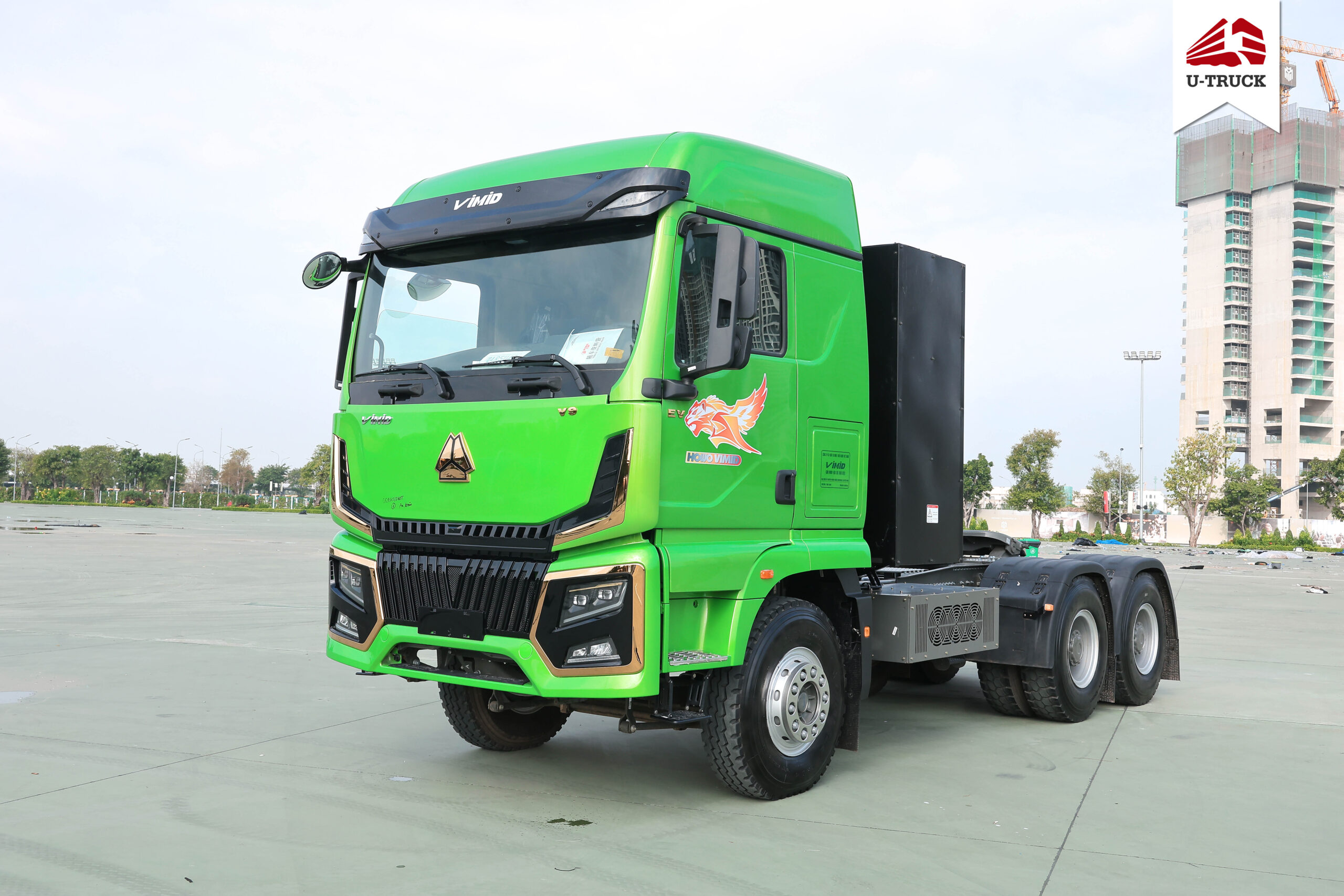
SITRAK G7X EV 342 kWh High-Roof: Focusing on Comfort and Safety Technology
The SITRAK G7X EV 342 kWh High-Roof has the smallest battery capacity of the three models, but still delivers a combined peak output of 550 kW from its two electric motors. According to the product page, the truck uses a 342 kWh LFP battery, dual-gun CCS2 DC charging, a maximum charging input power of 250 kW, a charging time of approximately 1.5 hours, and a reference mixed-operation driving range of 260 km.
Its integrated drivetrain combines the electric motors, AMT transmission, and MCE12ZG rear axle assembly in a compact configuration, offering rapid traction response. The VGD71S front axle is rated at 7.1 tonnes, while the MCE12ZG rear axle is rated at 12 tonnes. The transmission is specified with 2 forward gears and 1 reverse gear.
This model stands out in terms of driving comfort. Its high-roof cabin features two sleeper berths, leather-upholstered air-suspension seats, a 12.3-inch display with an integrated 360-degree camera system, cruise control, and electrically adjustable and heated mirrors. Driver assistance and safety systems include ESC, ASR, Forward Collision Warning (FCW), Lane Departure Warning (LDW), and ABS.
Advantages: Extensive cabin and safety equipment, high combined motor output, and clearly specified dual-gun fast-charging capabilities.
Suitable for: Container transportation and fixed-route logistics over short to medium distances, particularly for businesses that prioritize driver comfort and safety assistance technologies.
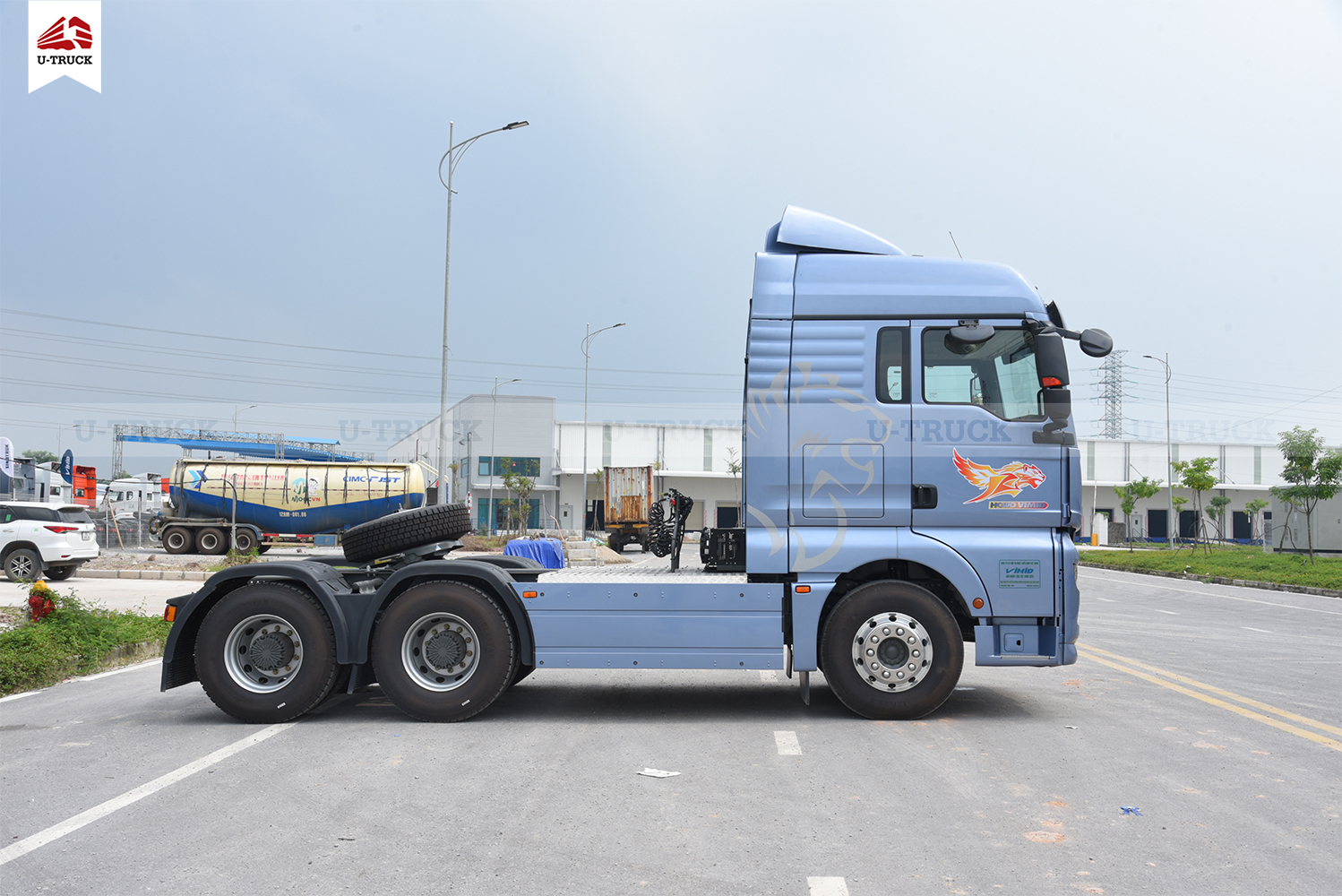
HOWO TX EV 400 kWh: Balancing Energy Capacity and Route Flexibility
The HOWO TX EV 6×4 400 kWh sits between the other two models in terms of battery capacity. It features an electric motor with a peak output of 520 kW, maximum torque of 3,000 Nm, and a 6-speed AMT transmission, supporting vehicle launch, hill climbing, and traction distribution under varying road conditions.
The 400 kWh LFP battery pack is combined with a thermal management system designed to support operation in demanding working environments. The front axle is rated at 7.1 tonnes, while the rear axle assembly is rated at up to 13 tonnes. The chassis uses high-strength steel and an NS-07 suspension system, with high- and low-voltage wiring routed separately.
The TX-U flat-floor cabin features a 900 mm-wide sleeper berth, a 10.1-inch display, a multifunction steering wheel, a four-direction camera system, and amenities designed for long-distance drivers. Its integrated electronic control system also features regenerative energy recovery during deceleration, with five adjustable levels.
Advantages: Mid-range battery capacity, multi-speed transmission, battery cooling system, and a chassis designed with commercial operations in mind.
Suitable for: Interprovincial logistics, container transportation connecting to seaports, and fixed routes where charging schedules can be arranged at the starting and destination points.
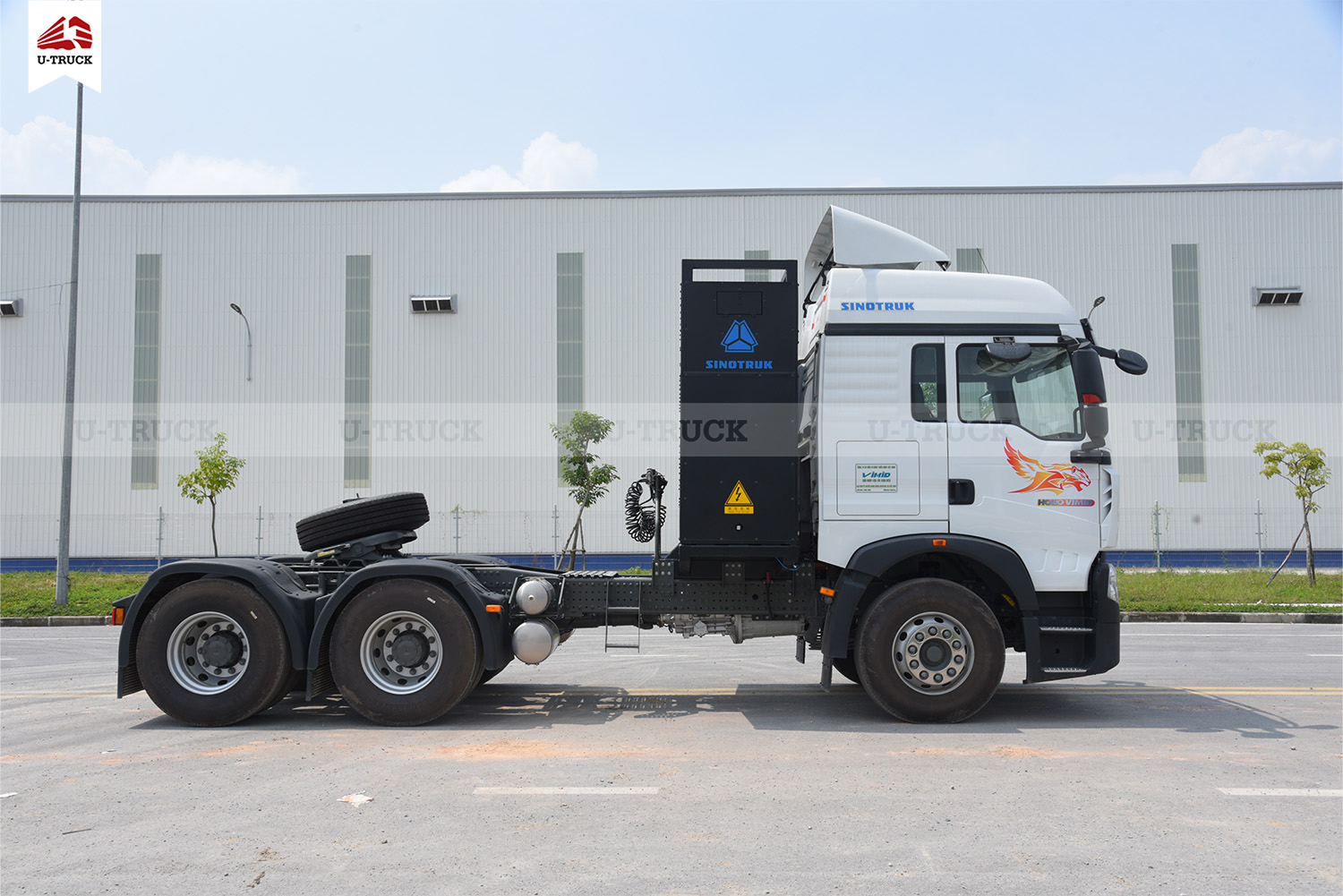
Comparison Based on Four Key Factors Affecting Operational Efficiency
Battery Capacity and Driving Range
In terms of nominal battery capacity, the ranking is V9 EV 600 kWh > TX EV 400 kWh > G7X EV 342 kWh. A larger battery provides additional capacity for longer journeys or situations where the truck needs to wait for loading and unloading while using auxiliary electrical systems. However, energy consumption also depends on the gross combination weight, speed, road gradient, weather conditions, driving habits, and the proportion of loaded and unloaded travel.
Tractive Performance and Transmission
According to the published specifications, the V9 EV delivers 575 kW, the G7X EV delivers a combined 550 kW, and the TX EV delivers 520 kW. However, trailer-pulling capability is also affected by gear ratios, axle configuration, traction, and the vehicle’s gross weight limits.
- V9 EV: AMT transmission with 4 forward gears and 2 reverse gears, and a 16-tonne rear axle.
- G7X EV: Integrated drive system at the second and third axles, with an AMT transmission featuring 2 forward gears and 1 reverse gear.
- TX EV: 6-speed AMT transmission, suitable for varying speed requirements and diverse terrain, according to the product description.
For businesses that frequently transport heavy loads or operate on steep roads, it is advisable to request distributor guidance based on the actual gross combination weight and road gradients rather than relying solely on maximum motor output.
Cabin Comfort and Safety
The G7X EV High-Roof features a 12.3-inch display, a 360-degree camera, two sleeper berths, and is specified with ESC, ASR, FCW, and LDW systems. The V9 EV has a 14-inch display, two sleeper berths, and an ABS system across all three axles. The TX EV features a flat-floor cabin, a 900 mm-wide sleeper berth, a 10.1-inch display, and a four-direction camera system.
Investment, Charging, and Operating Costs
When assessing investment efficiency, businesses should prepare a Total Cost of Ownership (TCO) analysis covering at least the following:
- Vehicle purchase price, financing costs, insurance, and registration.
- Actual electricity rates at different charging times, charging service fees, and energy consumption (kWh/100 km).
- Charging stations, power supply capacity at the vehicle depot, and backup solutions in case a charging station becomes unavailable.
- Maintenance costs, tires, spare parts, and battery warranty conditions.
- Vehicle downtime for charging, number of trips per day, and revenue per shift.
A truck with a smaller battery that operates on schedule and can be charged during loading and unloading may be more cost-effective than a larger-battery truck whose initial investment exceeds operational requirements. Conversely, a larger battery may reduce the need to arrange charging points along long-distance routes. Ultimately, operational data is needed to demonstrate the actual cost-effectiveness of each option.
Should You Choose the HOWO V9 EV, G7X EV, or TX EV?
| Business Requirements | Model to Prioritize for Evaluation | Main Reason |
|---|---|---|
| Longer routes, heavy cargo, and limited charging points along the route | HOWO V9 EV 600 kWh | 600 kWh battery and published rear axle load rating of 16 tonnes |
| Fixed port-to-warehouse routes, prioritizing driver comfort and safety | SITRAK G7X EV 342 kWh | High-roof cabin, extensive safety assistance features, and dual-gun CCS2 charging |
| Intra-provincial/interprovincial logistics, port connectivity, and mid-range battery capacity requirements | HOWO TX EV 400 kWh | 400 kWh battery, 520 kW motor, and 6-speed AMT transmission |
These recommendations are intended as an initial screening guide, not a definitive conclusion about the best option for every business. If a route involves frequent uphill sections, consistently heavy loads, or extended waiting times at ports, businesses should conduct vehicle trials and recalculate the required battery reserve.
Conclusion
For businesses prioritizing energy reserves for long-distance routes and heavy-duty applications, the HOWO V9 EV 600 kWh is the first model worth considering. If premium cabin comfort and advanced safety assistance features are the main priorities, the SITRAK G7X EV 342 kWh High-Roof is a strong candidate. For interprovincial transportation, port connectivity, and a balanced configuration, the HOWO TX EV 400 kWh is a suitable option to include in the evaluation shortlist.
To select a truck that matches actual operating requirements, businesses can provide U-TRUCK with details about their routes, distance traveled per shift, gross combination weight, number of trips per day, and available charging infrastructure. Based on this information, the consulting team can recommend a suitable configuration and provide a quotation.
U-TRUCK Hotline: 081 680 8899.
Featured news

Related news