

BEV, PHEV, HEV, or REEV? Understanding the Key Differences
Although all of them utilize electric power, BEV, PHEV, HEV, and REEV each feature distinct designs, operating principles, and cost-efficiency advantages. From zero-emission battery electric vehicles to flexible hybrid systems that combine electric motors with internal combustion engines, understanding the characteristics of each technology will help you determine which type of vehicle best suits your real-world driving or transportation needs.
How is a REEV Truck Different from a BEV Electric Truck?
REEV and BEV are two of the most common technologies used in electric trucks. While both rely on electric motors to drive the wheels, they differ significantly in terms of powertrain architecture, driving range, and energy management. Understanding these differences can help businesses choose the right electric truck for their operational requirements.
| Criteria | REEV | BEV |
|---|---|---|
| Power source | Electric motor + gasoline/diesel generator (range extender) | Fully electric motor |
| Wheels driven by | Electric motor only (combustion engine does not drive wheels directly) | 100% electric motor |
| Combustion engine | Yes, only to charge the battery when needed, no direct power transmission | None |
| Operating range | Major advantage. When the battery runs low, the combustion engine automatically runs to generate power, allowing hundreds of additional kilometers without needing to stop and charge | Fully dependent on battery capacity. When the battery runs out, it must be charged, resulting in longer wait times |
| Dependence on charging stations | Less dependent on charging stations; can “self-rescue” with fuel when needed | Highly dependent on the charging network, especially for long-distance trips |
| Initial investment cost | Usually cheaper than a BEV with the same range, since it doesn’t need an excessively large battery | Higher cost due to needing a larger battery to achieve an equivalent range |
| Operating cost | Higher, since it still consumes fossil fuel when the generator is running | Lower, since it only uses electricity, much cheaper per km |
| Environmental impact | Still emits CO2 while the combustion engine is running | Zero emissions during operation |
| Maintenance cost | Higher due to still having a combustion engine with more mechanical parts requiring maintenance | Significantly lower, fewer moving parts, no oil changes needed |
| Best suited for | Businesses operating long routes without full charging infrastructure yet; businesses wanting to gradually transition to electrification without being fully dependent on charging stations | Businesses operating in urban areas with fixed routes and depot charging stations; businesses prioritizing low operating costs and committed to zero-emission goals |
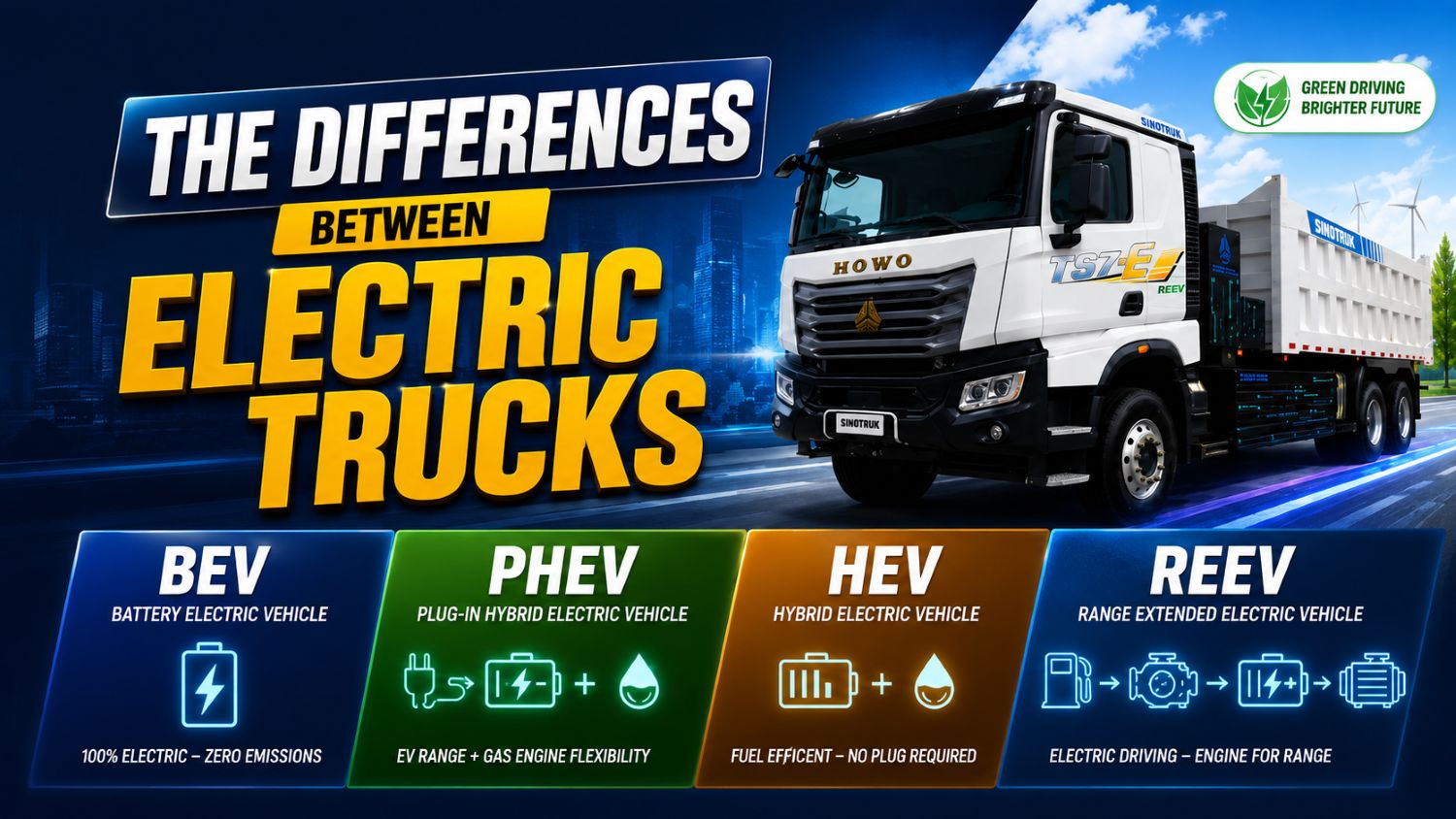
Differences in Design and Operating Principles of REEV, PHEV, and HEV
Unlike BEVs, REEVs, PHEVs, and HEVs all utilize a combination of an electric motor and an internal combustion engine. However, they differ in their powertrain architecture and how these components work together to propel the vehicle.
| Criteria | REEV (Range-Extended EV) | PHEV (Plug-in Hybrid EV) | HEV (Hybrid EV) |
|---|---|---|---|
| Structure | Essentially a pure electric vehicle (BEV), with an added gasoline engine + generator unit (called a range extender) | Structure similar to HEV but with an upgraded, larger battery and an external charging port | Gasoline engine and electric motor jointly transmit power to the wheels through a complex transmission (or power-split device/e-CVT). Battery is very small |
| Main power source | 100% electric motor | Electric motor and combustion engine | Electric motor and combustion engine |
| Combustion engine’s role in driving the wheels | Generates electricity only (not mechanically connected to the wheels) | Can directly drive the wheels or generate electricity | Directly drives the wheels; electric motor only assists |
| Charging from external source | Yes (AC/DC charging) | Yes (AC/DC charging) | No (self-charges only while driving) |
| Electric motor drives wheels? | Yes (sole driving force) | Yes (can run independently at high speed) | Yes (assists or runs independently for short distances) |
| External charging port | Yes, plugs in like an EV, plus has a backup generator | Yes, can be plugged in, but can also partially self-charge via the combustion engine | No, battery only self-charges via regenerative braking and the combustion engine |
| Battery capacity | Large (relatively close to BEV), long pure-electric range | Medium capacity, shorter pure-electric range than REEV (usually a few dozen km) | Very small, only enough to assist for short periods, cannot drive purely on electric power for long |
| Pure electric (EV) range | Longest among the three types | Medium, shorter than REEV | Very short, only a few km or nearly negligible |
| Role of the combustion engine | Only generates electricity for the battery or motor | Drives the vehicle and charges the battery | Drives the vehicle, assists the motor and charges the battery |
| Ability to keep driving when battery is depleted | Yes, thanks to the backup generator | Yes (switches to gasoline/diesel power) | Yes, just refuel as normal |
| Fuel consumption level | Lower than a traditional gasoline vehicle | Low | Low |
Conclusion
The competition among BEVs, PHEVs, HEVs, and REEVs demonstrates that there is no one-size-fits-all approach to the electrification of the automotive industry. The coexistence of these technologies allows consumers and businesses to adopt electrified vehicles based on their specific needs and the charging infrastructure available in their regions.
Whether you choose a fully electric vehicle or a hybrid powertrain that combines an electric motor with an internal combustion engine, the transition toward vehicle electrification is becoming an inevitable trend. By understanding the key differences between these technologies, you can make a more informed decision and confidently embrace the future of sustainable mobility.