

What Is FCEV? Understanding Hydrogen Fuel Cell Electric Vehicle Technology
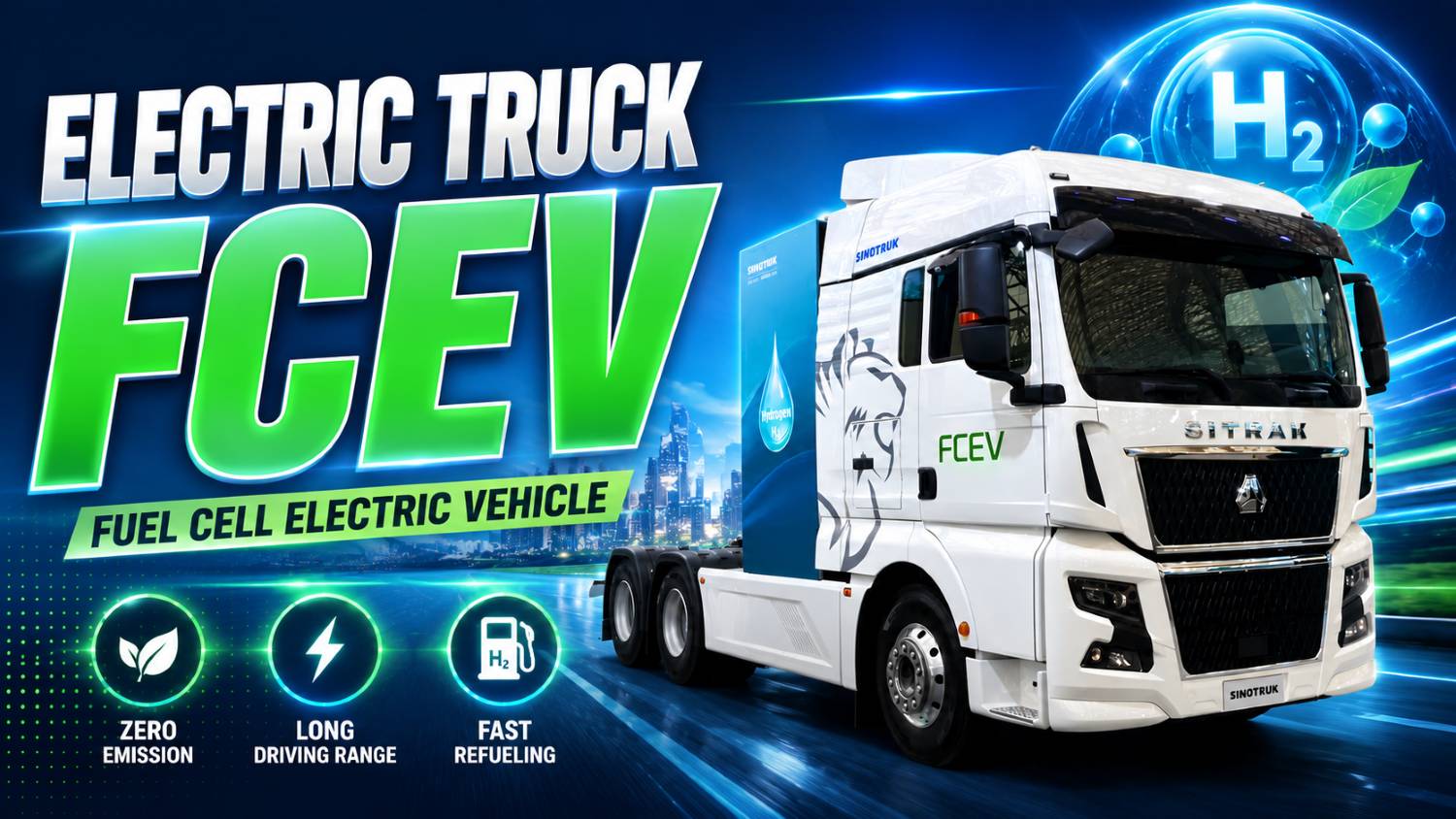
Hydrogen Fuel Cell Electric Vehicles (FCEVs) represent a breakthrough solution for the future of the automotive industry. Unlike conventional battery electric vehicles, FCEVs generate electricity directly through a chemical reaction between hydrogen and oxygen, delivering strong performance without the long charging times associated with battery-powered vehicles. Even more impressively, hydrogen refueling takes only a few minutes, and the only byproduct emitted is pure water, making this technology one of the most promising pathways toward zero-emission transportation. This article explores what FCEVs are, how they work, and why hydrogen-powered vehicles are expected to play an important role in the future of sustainable mobility.
What Is an FCEV?
FCEV stands for Fuel Cell Electric Vehicle. It is an electric vehicle that uses a hydrogen fuel cell to generate electricity for powering an electric motor. Unlike Battery Electric Vehicles (BEVs), which rely primarily on electricity stored in large rechargeable battery packs, FCEVs produce electricity onboard through an electrochemical reaction between hydrogen (H₂) and oxygen (O₂) inside the fuel cell.
A defining feature of an FCEV is that the wheels are always driven by an electric motor, while the fuel cell functions solely as an electricity generator. The vehicle is also equipped with a small lithium-ion battery that stores energy recovered during regenerative braking and provides additional power during acceleration or high-load driving conditions.
The only byproducts produced by the fuel cell reaction are water (H₂O) and heat. As a result, FCEVs are widely regarded as one of the cleanest and lowest-emission transportation technologies available today.
Components of an FCEV
Hydrogen Storage Tank
Hydrogen is compressed to very high pressure (typically 350 bar or 700 bar) and stored in high-strength composite pressure tanks designed to ensure safety and durability.
Fuel Cell Stack
The fuel cell stack is the heart of an FCEV. Inside the fuel cell:
- Hydrogen is supplied to the anode.
- Oxygen from the air enters the cathode.
- An electrochemical reaction generates electricity.
- The only byproducts are water and heat.
Lithium-Ion Battery
A small lithium-ion battery stores energy recovered through regenerative braking, provides additional power during acceleration, and helps stabilize the vehicle’s electrical supply.
Electric Motor
The electric motor is the only component that drives the wheels, delivering smooth acceleration, instant high torque, and quiet, refined operation.
How Does an FCEV Work?
Unlike a BEV, which must be recharged from the electrical grid, an FCEV (Fuel Cell Electric Vehicle) generates electricity onboard while driving. Instead of burning fuel, it produces electricity through an electrochemical reaction inside the fuel cell.
Energy Flow
Hydrogen (H₂) → Fuel Cell → Electricity → Buffer Battery / Electric Motor → Wheels
Hydrogen Storage
Hydrogen is compressed at very high pressure (typically 350–700 bar) and stored in specially designed high-strength composite tanks.
Fuel Cell Reaction (Fuel Cell Stack)
Inside the fuel cell:
- Hydrogen (H₂) enters the anode, while oxygen (O₂) from the air enters the cathode.
- A Proton Exchange Membrane (PEM) separates electrons from hydrogen protons.
- The electrons flow through an external circuit, generating electricity, while the protons pass through the membrane and combine with oxygen to produce water.
- This is an electrochemical reaction, not combustion, so it generates electricity without producing harmful exhaust emissions.
Byproduct: Water Vapor Only
This is one of the defining advantages of FCEVs. The only byproducts are water (H₂O) and heat, making the vehicle zero-emission at the point of use.
Buffer Battery
Because the fuel cell cannot instantly respond to rapid power demands, FCEVs are equipped with a small lithium-ion buffer battery. It helps:
- Stabilize the electrical output.
- Store energy recovered through regenerative braking.
- Provide additional power during hard acceleration or peak load conditions.
Electric Motor Drives the Wheels
The electricity is supplied to the electric motor, which drives the wheels. Like a BEV, an FCEV delivers:
- Smooth and quiet operation.
- Instant torque.
- Responsive acceleration.
- High driving efficiency.
Operating Modes of an FCEV
An FCEV (Fuel Cell Electric Vehicle) is managed by an advanced Energy Management System (EMS) that optimizes power distribution between the fuel cell stack and the buffer battery to maximize efficiency and performance.
| Operating Mode | System Operation |
|---|---|
| Start-Up | The lithium-ion battery provides the initial power to start the vehicle’s electrical systems. |
| Normal Driving | The fuel cell continuously generates electricity to power the electric motor. |
| Acceleration | The fuel cell and lithium-ion battery work together to provide additional power for improved acceleration. |
| Regenerative Braking | The electric motor acts as a generator, converting kinetic energy into electricity to recharge the battery. |
| Vehicle Stop / Idle | The fuel cell reduces or temporarily stops operation to conserve hydrogen. |
Thanks to this intelligent energy management strategy, FCEVs maintain high efficiency and reliable performance across a wide range of driving conditions.
Advantages of FCEVs
Fast Refueling
One of the biggest advantages of Fuel Cell Electric Vehicles (FCEVs) is their rapid refueling time. Refilling a hydrogen tank typically takes only 3–10 minutes, which is significantly faster than charging most Battery Electric Vehicles (BEVs).
Long Driving Range
Thanks to the high energy density of hydrogen, many modern FCEVs can travel 500–700 km (310–435 miles) or even farther under optimal conditions. This makes them particularly well suited for:
- Long-haul trucking
- Logistics and freight transportation
- Container hauling
- High-utilization commercial fleets
Zero CO₂ Emissions During Operation
The only byproducts of the fuel cell’s electrochemical reaction are water (H₂O) and heat. As a result, FCEVs produce zero tailpipe CO₂ emissions, helping reduce greenhouse gas emissions and improve air quality in urban areas.
Smooth and Quiet Driving Experience
Like other electric vehicles, FCEVs offer:
- Quiet operation
- Minimal vibration
- Instant torque
- Smooth and responsive acceleration
These characteristics provide a comfortable driving experience while delivering strong performance.
Well Suited for Heavy-Duty Commercial Vehicles
Unlike BEVs, which require large and heavy battery packs to achieve long driving ranges, FCEVs can significantly reduce battery size by generating electricity onboard from hydrogen. This allows for:
- Higher payload capacity
- Reduced vehicle weight
- Faster refueling
- Improved operational efficiency for long-distance commercial transportation
Are There Any Limitations to FCEVs?
Despite their many advantages, Fuel Cell Electric Vehicles (FCEVs) still face several challenges that limit their widespread adoption.
Limited Hydrogen Refueling Infrastructure
One of the biggest barriers is the limited availability of hydrogen refueling stations. In many countries, hydrogen infrastructure is still in its early stages of development, making FCEVs less practical for widespread commercial use.
High Manufacturing Costs
Fuel cell systems rely on precious metals such as platinum as catalysts, which significantly increase production costs. As a result, FCEVs are generally more expensive than many other types of electric vehicles.
High Cost of Hydrogen
The production, transportation, and storage of hydrogen remain costly. Until these costs decline and large-scale hydrogen production becomes more economical, operating FCEVs may remain relatively expensive.
High-Pressure Storage Requirements
Hydrogen must be stored in high-pressure tanks (typically 350-700 bar) that meet strict safety standards. This increases the complexity of the vehicle’s storage system and contributes to higher manufacturing costs.
How Does an FCEV Compare with BEVs, HEVs, PHEVs, and REEVs?
| Technology | Energy Source | External Charging | Internal Combustion Engine (ICE) | Wheel Drive |
|---|---|---|---|---|
| BEV | Battery | Yes | No | Electric motor |
| HEV | Gasoline + Electricity | No | Yes | ICE and/or electric motor |
| PHEV | Battery + Gasoline | Yes | Yes | ICE and/or electric motor |
| REEV | Battery + Range Extender Generator | Yes | Yes (generator only) | Electric motor |
| FCEV | Hydrogen | No (Hydrogen refueling) | No | Electric motor |
As shown above, both FCEVs and BEVs are electric vehicles powered exclusively by an electric motor. The key difference lies in how electricity is supplied. A BEV stores electricity in a large rechargeable battery that must be charged from the power grid, whereas an FCEV generates electricity onboard through a hydrogen fuel cell, eliminating the need for conventional battery charging while enabling fast hydrogen refueling.
Conclusion
By now, you should have a clear understanding of what an FCEV is, how it works, and the key advantages and limitations of hydrogen fuel cell technology. With zero tailpipe emissions, rapid hydrogen refueling, and long driving range, FCEVs are increasingly recognized as one of the most promising solutions for the future of the automotive industry, especially in the commercial vehicle and long-haul transportation sectors.
As hydrogen infrastructure continues to expand and the cost of fuel cell technology declines, Fuel Cell Electric Vehicles (FCEVs) are expected to become an essential part of the sustainable transportation ecosystem. Together with BEVs, HEVs, PHEVs, and REEVs, FCEVs will play a complementary role in meeting the diverse mobility and freight transportation needs of the future while accelerating the transition toward cleaner, low-carbon transportation.